BIZCHINA> Management

|
BIZCHINA> Management
|
|
Related
Whether you agree with globality or disagree, don't ignore it
(chinadaily.com.cn)
Updated: 2008-09-04 18:24
If business is supposed to slacken during the sweltering days of August, that message has failed to reach Embraer, the aircraft maker based in Sao Jose dos Campos, Brazil.
Earlier this month the company -- it is the world's fourth largest plane manufacturer -- said it had doubled its net income in the second quarter to $134 million and delivered 52 aircraft, compared with 36 during the same period last year.
At a time when airlines all over the world are reeling from the double whammy of high oil prices and a faltering economy, Embraer expects to deliver an impressive 200 aircraft. Its backlog of orders stands at a robust $20.7 billion.
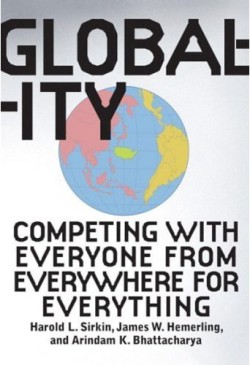
Embraer's growth during difficult economic times offers an example of the way that companies from emerging markets are reshaping global business, argue Harold L. Sirkin, James W. Hemerling and Arindam K. Bhattacharya in their new book, Globality: Competing with Everyone from Everywhere for Everything. The authors, who are consultants with the Boston Consulting Group, say that globalization has entered a new phase. The old model of globalization was about multinationals from Europe, the US and Japan expanding into the developing countries, attracted primarily by low raw material and labor costs. In the new phase -- which the authors term "globality" -- firms from rapidly developing economies such as Brazil, Russia, India, and China are stepping out to challenge the incumbent multinational giants, often on their own turf. It is "a different kind of environment, in which business flows in every direction. Companies have no centers. The idea of foreignness is foreign," the authors write. Consider Embraer as a case in point. During the late 1980s, the company, which the Brazilian government launched in 1969, nearly went bankrupt. It faced intense competition, and demand for its aircraft was low. Though the government pumped in cash, Brazil itself was in poor economic shape -- which meant future bailouts were unlikely. In 1994, Embraer was privatized, with investors putting in $161 million. A year later, Mauricio Botelho took over as the CEO. He focused Embraer on making small jets -- planes with less than 120 seats -- used primarily for regional flights. In this segment, demand was much higher than supply, and Embraer took off. The company then introduced a new design -- called the "double bubble" -- which gave the passengers more room without sacrificing fuel efficiency. Embraer also converted larger regional jets into upscale executive models -- named Phenom and Lineage -- whose sales were less vulnerable to swings in fuel prices. Following this strategy allowed Embraer to soar past its rivals. Today it is a giant with $4 billion in annual revenues and 24,000 employees, a serious rival to firms such as Canada's Bombardier. Challenger 100 Sirkin and his co-authors call companies like Embraer "challengers," and they identify 100 of them. Among them are 66 based in Asia -- 41 in China, 20 in India -- 13 in Brazil, seven in Mexico and six in Russia. Total revenues for the 100 challenger companies were $1.2 trillion in 2006. This might seem to be a relatively small sum -- after all, the combined revenues of Wal-Mart, Exxon Mobil and General Motors were $900 billion in 2006 -- but it is rapidly becoming larger, year after year. The challengers' revenues grew at 30 percent a year between 2004 and 2006, or at three times the pace of companies in the S&P 500 and Fortune 500. The challenger companies are also highly profitable: Their operating profits were 17 percent in 2006, compared with 14 percent for the S&P 500 companies. "They're fast growing, hungry, and have access to all the world's markets and resources," the authors write. "They're showing up everywhere -- in each other's markets throughout the world, in markets that are less developed than their own and, increasingly, in the developed markets of Japan, western Europe and the United States." (For more biz stories, please visit Industries)
|
文山县| 卫辉市| 平乐县| 内乡县| 东乡县| 新干县| 灵石县| 广河县| 丹棱县| 寿光市| 昌黎县| 乐山市| 甘南县| 旬邑县| 上犹县| 外汇| 清镇市| 新泰市| 华池县| 淅川县| 石柱| 湘潭县| 西吉县| 抚州市| 永昌县| 尚志市| 南溪县| 承德市| 襄樊市| 镇安县| 侯马市| 乐山市| 伊宁县| 乌兰察布市| 柞水县| 平泉县| 汪清县| 海阳市| 武冈市| 黄平县| 克拉玛依市|