BIZCHINA> 30 Years of Reforms

|
BIZCHINA> 30 Years of Reforms
|
|
Related
Beijing's service sector goes for the gold
By Liu Jie (China Daily)
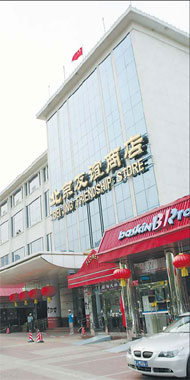
Updated: 2008-08-20 11:35 Shopping For foreigners, shopping in Beijing has also entered the 21st century with a vengeance. Guan Tong, 46, a former assistant at the Beijing Friendship Store, recalls that in the old days, it was an honor to work at the only store in Beijing that was authorized by the government to receive foreign guests. "We had to pass an English examination and an interview. The training included international etiquette and knowledge of traditional Chinese goods, such as silk, jade, pearl, as well as the 'four Chinese treasures' - brushes, ink sticks, paper and ink stones," she said. The Friendship Store was only allowed to receive foreign exchange certificates (FECs), a currency used by foreigners before 1994, she added. Guan could never have imagined the range of shops and other commercial facilities available in Beijing today. From boutique department stores (such as the World Trade Centre, The Place, and Shin Kong Place) to giant shopping malls like the Golden Resources Shopping Mall to hubs of individual shops (such as the Xiushui Silk Market and the Hongqiao Pearl Market), the range of domestic and imported goods available to both foreigners and local consumers is simply staggering. Dongsi Street, a 15-minute drive from Tian'anmen Square, is regarded by locals as Beijing's Shibuya (the fashion district in Tokyo). Here there are boutiques operated by young trend-setters, as well as established shops with staffs of experienced tailors. Feng Yanyang has run a jeans store called "Cool Jeans" on Dongsi for almost 10 years. In addition to jeans - both brand name and locally made - her shop sells second-hand luxury brands, which are popular with foreign visitors. "Years ago, we'd get a few foreigners, usually students. But now, a lot of overseas travelers come here in search of our creative goods," said Feng, wearing a tank top and Diesel baggy jeans with a pair of FitFlops. Next door is a tattoo studio run by a 25-year-old artist from Hong Kong. "He's doing very well. His customers, including foreigners, have increased noticeably since 2006, when the shop opened," said Feng. Another favorite of foreigners is Maliandao Tea City in the southern part of the city. Maliandao is a hub of thousands of tea merchants from every corner of China and the world. In addition to small shops, it includes a kind of tea museum, displaying more than 30 types of tea, as well as tea sets and other paraphenalia. "Here you can find all types of Chinese tea, from Puer to green tea, from black to jasmine tea, even flower and herb teas preferred by young ladies," said Fujian native Fan Li. Buying tea and bargaining with the shopkeepers is an art enjoyed by many connoisseurs, both foreign and domestic, according to Fan. Fan's shop allows customers to sample tea for free, and some shop assistants can assist them in simple English. "We are still learning, and sometimes learn from our foreign customers, who stay in Beijing and can speak Chinese," says Fan.
Accommodations Both luxury hotels and budget accommodations are flourishing in Beijing. In addition, homestay offers another option for foreign visitors eager to experience "real life" in the city. According to the Beijing Tourism Bureau, Beijing boasts 46 five-star hotels, with 22,300 rooms and 33,000 beds, and 116 four-star hotels, with 34,500 rooms and 57,500 beds. Also, some 200 moderate or budget hotels are available to visitors, compared to almost none four years ago. In addition, 598 households have been selected for "homestay" accommodations during the Olympics, offering 726 rooms with 1,000 beds. Many of these showcase renovated homes in the Beijing's ancient hutong. "My home is centuries old, but it has clean toilets, computers, televisions and a refrigerator," says Wang Zhixi, owner of an Olympic homestay. Her siheyuan (courtyard home) in Dajinsi Hutong near the Shichahai lake area is handy to one of Beijing's burgeoning new bar and nightlife districts. Wang and her husband, who both claim descent from Qing Dynasty nobility, have decorated their home with traditional Chinese paintings. They are currently entertaining a German couple, who rent a room for 500 yuan per night. Yuan Xiaoqing's sprawling nine-bedroom home overlooking the Fragrant Hills is a far cry from the average Beijing flat. Yuan's home features a spacious rooftop garden with rose bushes, grape vines, fruit trees, and a willow. Yuan and her family have been offering homestays to overseas guests for three years and have received visitors from Europe, Canada and the United States, most of them high school or college students. Recently the family applied to become part of the Olympic homestay program, but organizers said the house was too far from the downtown area. Many commercial operators in Beijing offer to match travelers with households willing to rent them a room. Jacob Cooke, manager of Beijing Homestay Agency, has directed many guests to Yuan's home and said the agency has a database of 30 to 40 families willing to provide homestay services. (For more biz stories, please visit Industries)
|
林甸县| 饶河县| 英山县| 康马县| 凌云县| 漳州市| 麦盖提县| 尉犁县| 蓬安县| 当涂县| 环江| 河源市| 阿拉善盟| 卓尼县| 平邑县| 买车| 潍坊市| 吐鲁番市| 云阳县| 武安市| 新丰县| 沙雅县| 阜宁县| 龙川县| 中卫市| 双辽市| 垫江县| 志丹县| 平顺县| 福州市| 湛江市| 皋兰县| 锡林浩特市| 溧水县| 光山县| 安顺市| 皮山县| 红桥区| 大石桥市| 临朐县| 贵港市|