BIZCHINA> Biz Life

|
BIZCHINA> Biz Life
|
|
Related
Heavy price
By Lu Haoting and Qu Xiaozhen (China Daily)
Updated: 2008-04-24 11:05
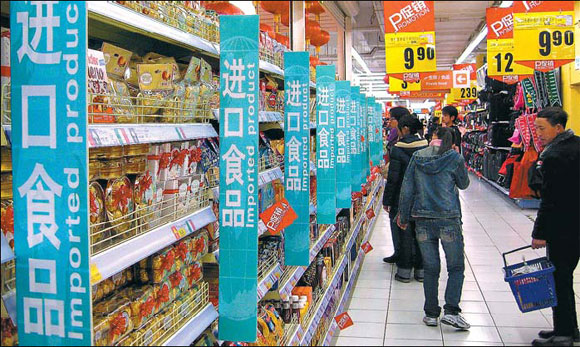
Bread, pasta, tortillas, canned fish and meat, dairy products, imported vegetables and fruits. These are staples of foreigners living in China. And that's precisely why spiraling food prices across the globe and the rise of the yuan against the US dollar have spelt double trouble for them. Prices of wheat and corn have doubled over the past year or so, according to the US-based Earth Policy Institute. This means higher prices of food products made directly from them, such as bread, pasta and tortillas. Pork, beef, milk and eggs, which depend indirectly on the grains, have become costlier, too. More than the rising food prices, it is the decline of the greenback that has made expatriates' life more difficult, says a 29-year-old Canadian living in Shanghai. "The exchange rate of the dollar against the yuan has dropped more than 20 percent from when I came to China," he says. He was posted to the Shanghai office by his international export firm three years ago. "The devaluation of the dollar can be interpreted as a drop in my pay because I have to pay in yuan here." Then take the example of a young French woman who lives in Beijing and shops almost daily at Jenny Lou's, a well-known chain store that imports a variety of food products. Peisha, as she prefers to be called, says prices of all imported food products she normally buys, such as canned tuna, bread, pasta, vegetables and fruits, have gone up. Her preferred loaf of bread alone costs an extra 2 to 3 yuan. Desperate to save as much as possible, she has started buying tuna canned in China because they cost less. But it is not only consumers who are feeling the pinch of the rising food prices. People running restaurants that specialize in foreign cuisine have been hit hard too. "Everything has become costlier," says Lu Hongwei, owner of Agrilandia-Italian Farm. The 9-year-old restaurant in the northeast suburb of Beijing is popular among expatriates and white-collar workers for its rustic Italian countryside flavor. "The price of pasta imported from Italy has risen thrice since last September. It's 70 percent more expensive than last year," says Lu, who also owns another Italian restaurant, Il Casale, near Lido Hotel. Pasta prices in Italy rose more than 20 percent last fall, triggering a nationwide protest in the country. The cost of raw material has gone up by 40 percent in Lu's restaurants, forcing her to raise prices on her dishes by 15 percent. "I had to pass the pressure on (to customers)," Lu says. "Even then I earn less than what I used to." But she still considers herself lucky because the flow of customers in her two restaurants has not ebbed. Global warming and the increasing use of durum wheat to make biofuels are the main reasons for the spiraling food prices, experts say. Durum wheat is the main ingredient that goes into making pasta in Italy. Italian millers' association Italmopa figures show durum wheat prices in the country have jumped 150-170 percent since April 2007. And the country imports about 40 percent of the durum wheat it consumes. (For more biz stories, please visit Industries)
|
正安县| 平乐县| 江孜县| 斗六市| 定州市| 卓尼县| 来宾市| 孟津县| 镶黄旗| 巩留县| 德阳市| 顺昌县| 阳泉市| 九龙县| 将乐县| 奎屯市| 大渡口区| 焦作市| 扎兰屯市| 旬邑县| 淅川县| 馆陶县| 陆河县| 呼伦贝尔市| 广州市| 苏尼特右旗| 彭水| 自贡市| 泰兴市| 西和县| 佳木斯市| 贵德县| 嵊泗县| 纳雍县| 汉沽区| 项城市| 疏附县| 乐清市| 隆回县| 台江县| 深泽县|