The role of international managers
Updated: 2007-09-10 13:44
The London Financial Times is right in describing the departure of Phil Murtaugh, former vice-president of Shanghai Automative Industrial Corporation (SAIC), as a "blow" to the Chinese company.
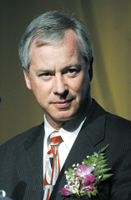
Murtaugh is joining Chrysler, taken over by Cerberus Capital management last month, to be the new head of its Asian operations. The announcement came only one day after Chrysler enlisted Toyota's former North American head to join its senior management team.
But what about SAIC, China's largest carmaker? What will happen, in particular, to its ambitious international plans? Business observers are eager to learn from SAIC's executive team about the necessary adjustments it is going to make.
Rarely does one person's change of job arouse so much interest. It shows how rules in the world of business have changed.
A successful regional operation, especially in a rapidly growing area of global business, can be more important for an international company than many of its other operations.
Extensive regional expertise, which Murtaugh gained from heading GM's China operations in the 1990s and from facilitating SAIC's buying of some of the assets of the British company, Rover, two years ago, and managing its investment interests in the South Korea carmaker Ssangyong, will be strategically important for a company that is considerably weak in its Asian operations.
But what can SAIC learn from this development? It has nothing to regret, of course. It did the right thing. By hiring a professional it made much progress in building up its business. As reported widely in the Chinese language press, it may be close to a merger deal with Nanjing Automotive by relying on the strength it has gained from its acquisition of Rover's assets.
|
|||


This year has been an auspicious one, due to capital market fluctuations and the cheap dollar, for foreign companies, including those from developing countries, to buy assets in the United States. The Indians and Arabs are doing it.
However, few Chinese companies, especially the private ones, are seen to be as active as their counterparts in other parts of Asia.
One reason is that Chinese companies do not usually have a team of international managers. Few of them have high-profile foreign executives as SAIC, a State-owned enterprise, once had.
Indeed, except for Lenovo, China's largest computer manufacturer, very little has been heard from the companies that are operating overseas about their international management teams.
The most incomprehensible case may be TCL, one of China's largest television and home appliance makers with its headquarters in South China's Pearl River Delta.
Ever since its acquisition of some French corporate assets (supposedly useful for expanding into the EU market), the company has yet to report any progress in building up its international team. The information that it has given to the public so far, other than discouraging financial figures, is about frequent changes to its Chinese executive team.
To compete in the global market, Chinese companies need to learn to keep not just one or two, but hundreds or thousands of international managers.
E-mail: younuo@chinadaily.com.cn
|
||
|
|