New challenges for development zones
(China Daily)Updated: 2007-03-19 08:56
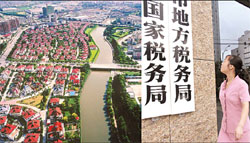 Storm clouds are gathering over the famed development zones
as these centerpieces of China's spectacular economic growth begin to recede
from the center of policymakers' attention.
Storm clouds are gathering over the famed development zones
as these centerpieces of China's spectacular economic growth begin to recede
from the center of policymakers' attention.
New economic policies pose new challenges for these hubs which churn out about 10 percent of the country's total industrial output, 15 percent of exports and about a quarter of realized foreign direct investment robbing them of the policy advantages once bestowed upon them to power national growth.
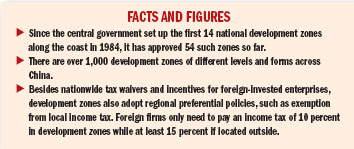
The first challenge comes from the new corporate income tax, which takes effect next year. The new system will not only unify tax rates for domestic and foreign enterprises but also deprive development zones of the preferential taxes they have come to enjoy. For example, foreign firms located inside these zones only pay an income tax of 10 percent but at least 15 percent if located outside.
 The second setback comes in the shape of land-use
restrictions. Earlier, if development zones needed more agricultural land to
expand, all they needed to do was applying to the government for permission,
which was seldom turned down. But others weren't allowed the same facility. All
that's going to change as the central government has now imposed strict
restrictions on industrial land expansion, putting development zones on a par
with their lesser cousins.
The second setback comes in the shape of land-use
restrictions. Earlier, if development zones needed more agricultural land to
expand, all they needed to do was applying to the government for permission,
which was seldom turned down. But others weren't allowed the same facility. All
that's going to change as the central government has now imposed strict
restrictions on industrial land expansion, putting development zones on a par
with their lesser cousins.
The way out
 Apart from their advanced services and well-oiled
infrastructure, the biggest advantage of development zones is their increasing
orientation toward industry clusters, says Liu Peiqiang, chairman of China
Association of Development Zones. He sees this as the best way to help eliminate
bottlenecks such as the unified tax rates and curbs on land use.
Apart from their advanced services and well-oiled
infrastructure, the biggest advantage of development zones is their increasing
orientation toward industry clusters, says Liu Peiqiang, chairman of China
Association of Development Zones. He sees this as the best way to help eliminate
bottlenecks such as the unified tax rates and curbs on land use.
"Development zones have realized that they can no longer fall back on unlimited land expansion and favorable government policies. So industry clustering and strengthening industrial chains should be the focus," Liu says. This view is shared by a number of industry experts.
Many development zones used to rely on far too favorable policies to attract
foreign investors, says He Manqing, with the research institute of the Ministry of Commerce. "They should now say 'no' to
energy-intensive and high-pollution projects," she says.
| 1 | 2 | 3 |  |
(For more biz stories, please visit Industry Updates)