 |
|
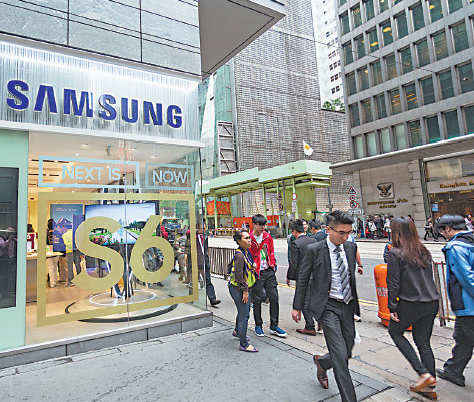
Shoppers walk past a Samsung retail store in Hong Kong. The South Korean-based company was involved in an investigation by the NDRC in January 2013. [Photo/Agencies] |
Tell us your reflections about the case?
China's anti-monopoly law enforcement came into its own during the investigation. It was related to intellectual property abuse. At times, it can be difficult to draw the line between intellectual property abuse and intellectual property protection. There were very few previous cases we could refer to. Qualcomm had been under investigation in the European Union, Japan and South Korea, but never admitted monopoly status.
In August 2014, the European Union Chamber of Commerce in China issued a public statement regarding the anti-trust department's law enforcement procedures. It questioned the impartiality of the investigation. How did you deal with that?
I refused to meet with them at first because they issued the statement before talking to us. But the chamber later said it was a misunderstanding. As for the transparency questions they raised, the details of a monopoly case "can, but not necessarily, be made public" according to Chinese law. Some companies have asked us not to reveal details of investigations because it could damage their image. We respected their concerns.
The US chamber of commerce complained about the behavior of investigators who raided the Mercedes-Benz's Shanghai office during a price-fixing probe in August 2014. The German auto giant was later fined $56.5 million by the NDRC. What was your reaction to this?
Well, the practice of mounting a raid to gather information is carried out by our US counterparts. Acquiring first-hand information is critical during an anti-trust case. If we had not raided the offices, key information would have simply disappeared. US anti-monopoly agents use the same techniques.
The other complaint against the NDRC was that it did not allow companies being investigated to hire lawyers. What are your comments on that?
During the Qualcomm case, there was a local lawyer on the spot all the time in our discussions.
Overseas critics say you have gone to great lengths to single out foreign companies. What is your response?
Investigating overseas companies accounts for only 10 percent of our workload. But we still need to improve a number of things. Now, we will publicly announce penalty notices, but information that companies believe contains business secrets will not be made public.

Copyright 1995 - . All rights reserved. The content (including but not limited to text, photo, multimedia information, etc) published in this site belongs to China Daily Information Co (CDIC). Without written authorization from CDIC, such content shall not be republished or used in any form. Note: Browsers with 1024*768 or higher resolution are suggested for this site.
License for publishing multimedia online 0108263 Registration Number: 130349