It was a hot, noisy afternoon in late April. Standing on the roof of a building in downtown Shenzhen, Ken Lee, a young executive of Shenzhen Huaqiang Industry Co Ltd, pointed at a pile of cement sacks and other construction materials and said: "Come back in June. You will see here a 5,000-square-meter 'maker' space, and that's just the first phase. We'll have everything here for makers who want to make a fortune."
Below him is the gigantic electronic parts market known as Huaqiangbei, where you can find almost every component necessary for making an electronic device.
Makers is a term that originated from the West to describe the technology hobbyists who follow the "do it yourself" philosophy, particularly in the open hardware and electronic sectors. It became a buzzword in China after Premier Li Keqiang visited the Chaihuo Maker Space in Shenzhen in January.
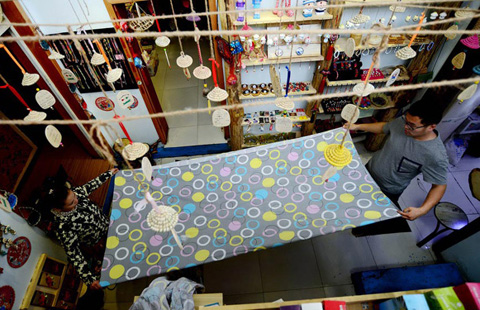
In these venues, makers can exchange ideas and use facilities such as 3D-printers and laser cutting machines to bring their visions to life. Those who have similar concepts can join forces to set up startup companies.
Worried about downward pressure on the Chinese economy, which recorded its slowest growth in six years of 7 percent in the first quarter, the central government aims to foster the maker culture and entrepreneurship to provide momentum for the world's second-largest economy.
The latest boost came on May 4, when Li promised more favorable policies for the whiz kids working in China's maker spaces.
All the crucial resources are coalescing in Shenzhen, the long-time testing ground in Guangdong province for China's reform and opening-up policy. The city's strong supply chain, abundant local factories eager for orders of any size and a small government make the city a paradise for makers and startups.
Hopes are high. The central government wants Shenzhen to be a leader again in the nation's economic transformation and give fresh impetus to the sluggish manufacturing industry. People with money dream of lucrative returns from investing in startups and shepherding them through public listings.
But the leap from maker to entrepreneur is a daunting one, and few survive the plunge into finance, mass manufacturing and the management of a complex company. Many young makers have no clue of the meaning of entrepreneurship.
Successful entrepreneurs such as Jack Ma, who endured years of struggle to build Alibaba Group Holding Ltd into a global e-commerce giant, must have the courage to start from scratch and take risks. They must have the ability to lead a team and mobilize resources, and the determination to follow the path they believe in no matter how difficult the journey is.
But many makers do it simply for fun. For example, a young man in Chaihuo Maker Space assembled a low-temperature cooker just because he wanted to eat juicy steaks. He never had any intention of putting his creation into mass production, let alone starting company.
For the tiny minority of makers who have the desire to commercialize their creations and be successful entrepreneurs, they must be well aware of the hardships that lie ahead.
China does not need makers so much as it needs entrepreneurs. Once these amateur inventors decide to take the plunge and fight for success, we as a nation should spare no effort to support them. The future of the country may rest on their shoulders.

Copyright 1995 - . All rights reserved. The content (including but not limited to text, photo, multimedia information, etc) published in this site belongs to China Daily Information Co (CDIC). Without written authorization from CDIC, such content shall not be republished or used in any form. Note: Browsers with 1024*768 or higher resolution are suggested for this site.
License for publishing multimedia online 0108263 Registration Number: 130349