 |
|
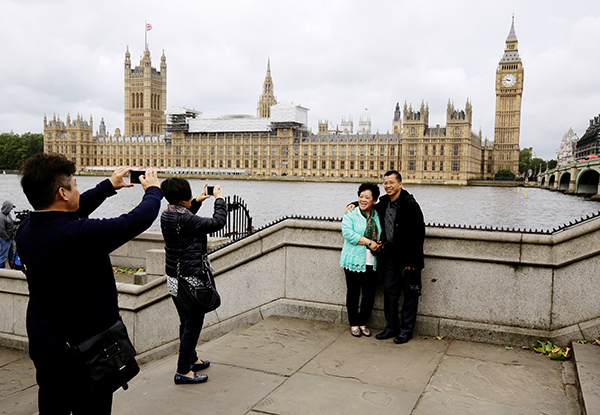
Chinese tourists take pictures near the Palace of Westminster in London. [Photo/Agencies] |
For most first-time Chinese visitors to London, a trip to the world-famous Oxford University is a must. But many know their hearts are really in the nearby "discount street" with numerous outlet boutiques of the world's leading fashion brands that are sold at cheaper prices.
Now with the plunge of the pound induced by Brexit, many may expect that hordes of Chinese tourists, who spend an average of more than 2,000 pounds ($2,650) per head, will flock to the UK, giving a much-needed shot in the arm for the British retail sector.
But here are four concerns that underline my suspicions about an imminent, explosive growth of tourists to the UK.
1. Pang Zi remains expensive after weight loss
While the pound has plunged to a three-decade low after Britons voted to leave the European Union, the United Kingdom remains one of the most expensive places in the world.
Some Chinese visitors have given the pound the nickname pang zi, which in Chinese means "fatties" that constantly reminds a visitor that the prices are much, much bigger than they look.
For the average Chinese tourist, preparations for travel and shopping (of which the Chinese translation literally means "bleeding struggle") in the UK could have started months ago as they study previous posts and videos on the web before they set their foot on England.
Travel websites may have been inundated by enquiries about UK tour packages, but there are no immediate discounts because their prices have been set a long time ago. You can only book groups to depart several weeks later.
2. Bargain hunters only get smarter
Chinese consumers are known for their belief that the successful should wear socially visible products to indicate their higher social standing. But most are born bargain hunters even when they're on prestige-seeking shopping sprees.
The most efficient way of luxury shopping is through daigou, or shopping agents, who will take orders from customers through social messaging media and ship the purchases from physical stores to China.
My friend Lisa (not her real name), one of such agents who is based in Oxfordshire, told me that in the days after the referendum, her customers had all switched to credit card payments in lieu of cash, as they expected a further fall in sterling.
Lisa serves a large rich, female clientele in China who discuss with her about new arrivals and purchases after thorough research on the internet.
3. It could be even more costly
As I wrote this column, sterling has managed to claw back some ground against the dollar and euro. While downward pressure remains, the worst could be over for the pound.
But if sterling continues to fall, some luxury companies may raise prices in the UK. It's expected that due to Brexit, inflation, prices for imports and labor costs are all likely to go up in the country, which would offset the savings for visitors from the cheaper pound.
4. The rise of the sophisticated Chinese traveler
Social critics have always lamented that some Chinese tourists lack the sophistication and culture of those from more developed nations. They might scrimp on flight tickets, hotel rates and eat lots of cheap food, while snapping up designer handbags, watches or clothes.
But a new generation of cultural tourists have emerged who are more interested in serendipity and casual encounters when they travel overseas. VisitBritain, the British tourism authority, notes that "the Chinese are more likely to expect a trip to Britain to be 'romantic' than is the typical inbound visitor".
This contrasts with a stereotypical Chinese visitor experience that has been summarized as "sleeping on the bus, taking pictures and shopping off the bus".


Copyright 1995 - . All rights reserved. The content (including but not limited to text, photo, multimedia information, etc) published in this site belongs to China Daily Information Co (CDIC). Without written authorization from CDIC, such content shall not be republished or used in any form. Note: Browsers with 1024*768 or higher resolution are suggested for this site.
License for publishing multimedia online 0108263 Registration Number: 130349