

A local area network goes global
Updated: 2012-11-03 14:44


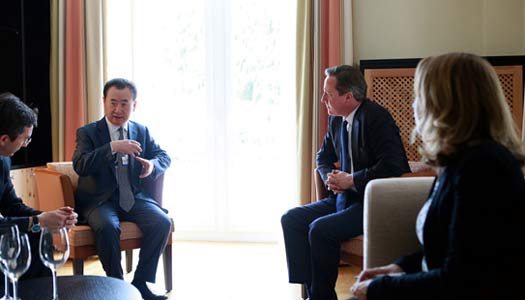
The process of getting to understand British employees made Wang realize that under the cultural differences on the surface, his British employees are likable individuals who are not so unlike his Chinese colleagues.
"I learned to embrace this difference, and try my best to think about things from their perspective."
For example, knowing that British workers value family time, Wang is keen to make sure that policies are put in place to ensure workers do not have to spend more time than necessary in the office.
"As I'm alone in the UK, I don't mind working any time of the day. But I understand this is not the case with my employees, so I adopt policies to accommodate these differences, which helps us to maintain a good working relationship."
Such instances demonstrate the flexibility within TP-Link's corporate culture. Unlike China's state-owned enterprises, which often make decisions centrally, privately-run businesses like TP-Link tweak their operations to suit local market needs.
"Our head office allows us to make many decisions on our own. If we discover some movements in a particular market in the morning, we could take the relevant action to make the most of the opportunity in the afternoon," Wang says.
He says such flexibility is achieved through transparent management. "We communicate openly, so that our head office trusts us to make the best decisions for the company as a whole."
TP-Link's process of internationalization started in 2005, when it began selling in overseas markets through distributors.
Looking to increase its international sales, TP-Link established its first overseas subsidiary in Sweden, but after a period of trial and error the company decided to leave the country in 2009.
"We realized that Sweden could not fully represent the characteristics of the whole European market. In contrast, the IT markets of Germany, the UK and Italy have often led the development of Europe's IT markets, whether in sales strategy, brand promotion or logistics management," Wang says.
Hoping to focus its resources on these key markets, TP-Link set up a subsidiary in Germany in 2009. From a team of three people, including Wang, the subsidiary's staff grew to about 20 people in 2010, at which time he was sent to Britain.
"Because we did so well in Germany, we wanted to replicate our success in other markets, so we then expanded into Italy and the UK," Wang explains, adding that Germany still remains TP-Link's biggest market in Europe.
Meanwhile, the company has established a presence in about 20 countries across Europe, the Americas and Asia. Last year, 49.8 percent of TP-Link's annual revenue was generated from international markets.
Its expansion into Europe has parallels with many privately-owned Chinese businesses that were motivated to expand overseas by commercial opportunities and the Chinese government's policy initiatives; China's 12th Five-Year Plan (2011-15) encourages privately-owned businesses to expand internationally.
Another factor is these companies' eagerness to learn the best technologies and management models in international markets. For example, the information about the British market gathered by Wang's team would become an invaluable resource for TP-Link's R&D team in China.
"Entering the European market has allowed us to learn local distribution methods and product application, which enables us to adjust our products accordingly," Wang says, adding that TP-Link's goal from day one has been to increase its international competitiveness.
"Since our establishment in 1996, our competitors have always been global brands, therefore our quality has always been set to withstand international competition.
"In the process of internationalization, our competitors never changed, but our markets have. Going global is a learning process through which we hope to strengthen ourselves and better service local customers."
cecily.liu@chinadaily.com.cn






- BYD exports three electric cars to Thailand
- Grid gets first jolt of residential solar power
- US now largest buyer of China's exports
- China's outbound M&As on the rise
- Tobacco control may entail price, tax rises
- Quanzhou becomes pilot financial reform zone
- New automobiles shine at Geneva Motor Show
- World's longest high-speed rail 'on track'
- Jiugui Liquor involved in plasticizer scandal again
- Accident reignites school bus safety concerns
- China to revise labor law
- Trademark registration under scrutiny
- Dinner ban takes toll on liquor firms
- CIC tables bid for London's Chiswick Park
- Property buyers eye overseas market
- Call for law to protect personal information
- China to cut train ticket prices
- Christmas business
- Solar industry to get jolt from new policies
- KFC chicken under spotlight
Survey & Comments