Brands unite to take new energy market


 |
|
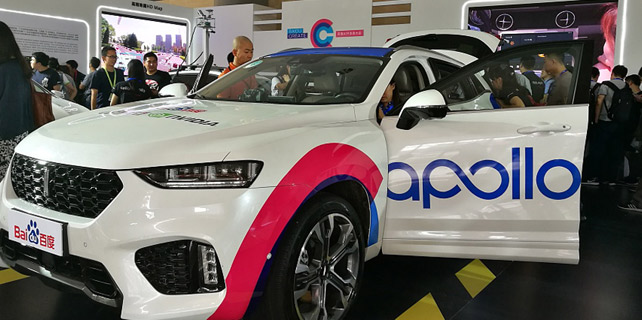
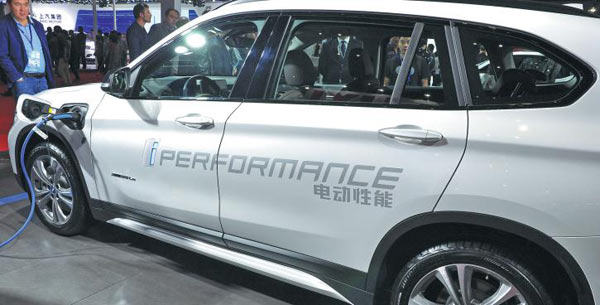
Visitors are attracted by a new energy car at the China International Industry Fair in Shanghai last year. [Photo provided to China Daily] |
International carmakers are accelerating their efforts to produce new energy vehicles in China to seize a larger share of the world's largest market for such cars.
Last week, German car giant Daimler signed a framework agreement in Berlin with China's BAIC Group to produce Mercedes-Benz-branded electric cars via their joint venture Beijing Benz Automotive.
In accordance with the 5 billion yuan ($736 million) agreement, the two are preparing to produce electric vehicles in China by 2020 and to provide the necessary infrastructure for battery localization using Chinese cells, as well as to expand research and development capacities.
The deal came as the Chinese authorities are encouraging international cooperation in the sector.
"Carmakers are encouraged to make the most of international technologies, capital and human resources to raise the level of China's new energy vehicle sector," said the National Development and Reform Commission. The comments were made in a document released last month in conjunction with the Ministry of Industry and Information Technology.
The country is expected to build a globally competitive automotive industry within 10 years, with new energy vehicles one of its top priorities, according to an industry guideline released in April.
By 2020, China expects domestic sales of electric, plug-in hybrids and fuel cell cars to reach 2 million, and such cars are to account for 20 percent of all auto sales by 2025.
Hubertus Troska, member of Daimler' board of management, said: "By 2025, the Chinese market will have a substantial share in global sales of Mercedes-Benz electric vehicles. Therefore, local production will be key to the success of our electric car portfolio, and crucial to flexibly serving local demand for electric vehicles.
"With our planned localization of electric cars and batteries with Chinese cells, we are dedicated to strengthening the region as an innovative hub for the automotive industry."
Earlier last month, Daimler also announced its intention to acquire a minority share in Beijing Electric Vehicle, a subsidiary of the BAIC Group, with the purpose of strengthening collaboration in the new energy car sector.
In addition to its cooperation with BAIC, Daimler has been working with China's BYD to produce Denza-branded electric cars, which have some of the longest driving ranges in the country. Volkswagen is taking an even bolder move in China. It signed an agreement in May with China's JAC Motors to build a joint venture dedicated to developing, producing and selling electric vehicles.
The 50:50 partnership will have a total investment of 6 billion yuan and has made Volkswagen the first international automaker to have three partners in China.
 |
|
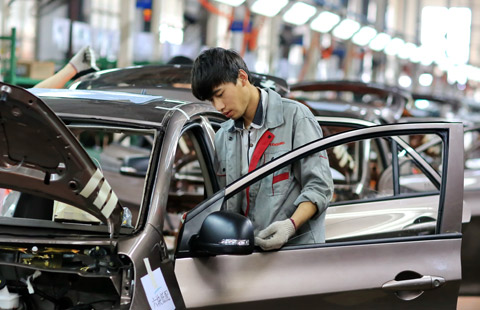
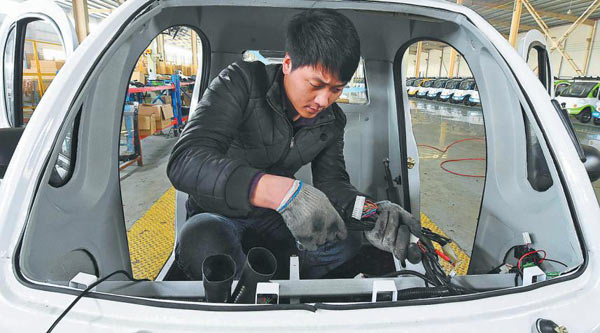
A worker assembles parts in an electric car on a production line in Weifang, Shandong province. [Photo by Ao Tu/For China Daily] |
Its first model, which will be produced at existing JAC facilities, is expected to roll off the assembly line in 2018.
Volkswagen has long made clear its ambition: to deliver 400,000 new energy vehicles to China in 2020. Jochem Heizmann, president and CEO of Volkswagen Group China, told reporters that about a quarter of them are expected to come from the new joint venture, JAC Volkswagen.
China has been the world's largest new energy car market since 2015. In the first five months of this year, sales totaled 136,000 vehicles nationwide, 7.8 percent growth year-on-year.
The China Association of Automobile Manufacturers estimated that new energy car sales could hit 800,000 units in 2017.
Rivaling Daimler AG in China, BMW AG announced in March that its local line-up will come with electrified options starting in 2019. BMW Brilliance Automotive was the first premium auto maker to manufacture new energy vehicles in the country. The local venture has produced four electrified models since 2014, including the all-new plug-in hybrid BMW X1 xDrive 25Le launched in March. Later this year, the all-new plug-in hybrid BMW 5 Series will hit the market as the company's fifth new energy model.
Hao Yan contributed to this story.
Contact the writer at lifusheng@chinadaily.com.cn