As part of its campaign to control air pollution, the city plans to keep the number of vehicles on the road under 2.1 million by the end of 2015 and 2.3 million by the end of 2017.
According to the plan, each household is allowed to have at most two cars, the last-digit rule will be introduced in 2014, and the lottery system for getting license plates will take effect in 2015.
Shijiazhuang and Tianjin are two of eight cities the China Association of Automobile Manufacturers predicted in early July would soon introduce car-curbing policies.
Another six are Shenzhen, Hangzhou, Chongqing, Qingdao, Chengdu and Wuhan.
An online poll launched by news portal ifeng.com after the Tianjin government released its policy shows that 48 percent of more than 11,000 respondents believe Shenzhen will become the next city to limit the number of car purchases.
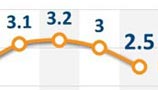
"If all eight cities introduce such policies, the auto sales will fall by some 400,000 units a year, some 2.5 percent of the sales nationwide," CAAM's Deputy Secretary-general Shi Jianhua told the National Business Daily.
Varying impacts
Though the auto industry as a whole will suffer, some experts say the effects vary with brands.
"The policies will have little effect on middle-range and premium cars whereas budget Chinese brands will face grave challenges," former secretary-general of the China Automobile Dealers Association Chen Dongsheng told China Business Times.
"The logic is simple. Now that a license is worth tens of thousands of yuan, who would buy a cheap car?"
He said middle-class and premium car brands will seize a larger market share based on statistics in large cities, including Shanghai and Beijing.
After Beijing introduced the lottery system in late 2010, most of 14 4S stores that opened in 2011 began selling joint-venture brands and premium cars, China Business Times reported.
Considering the fierce competition at the high end, Chen suggested that brands at the lower end of the value chain shift focus to smaller cities.
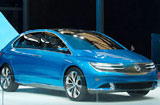
Despite a bleak outlook for gasoline-fueled cars, green vehicles are expected to seize a larger market share in the coming years.
Four central government ministries issued a joint plan in September to promote new-energy vehicles in industrialized areas with the highest concentration of PM 2.5, including the Beijing-Tianjin-Hebei region, the Pearl River Delta and the Yangtze River Delta.
According to the plan, a total of 61 cities will have 300,000 green-energy vehicles by the end of 2015.
The plan also details subsidies on such vehicles, offering a maximum of 500,000 yuan per unit.
National Business Daily reported that 25 cities of them now have 27,400 units in total, with some 23,000 for public use, a far cry from the goal.
The report indicates that the new-energy auto industry should see an explosive growth soon.
China News Service reported that the Beijing city government is working out a subsidy plan to stimulate the growth of new energy-driven small passenger vehicles, adding that the plan will be released in January.
It also said that local automakers BYD and JAC Motors are negotiating with the city government of Beijing to get their products eligible for subsidies.
According to Beijing's clean air action plan, it will have 200,000 clean energy vehicles on the roads by the end of 2017.

Copyright 1995 - . All rights reserved. The content (including but not limited to text, photo, multimedia information, etc) published in this site belongs to China Daily Information Co (CDIC). Without written authorization from CDIC, such content shall not be republished or used in any form. Note: Browsers with 1024*768 or higher resolution are suggested for this site.
License for publishing multimedia online 0108263 Registration Number: 20100000002731