

Abolition of govt cars to impact future demand
Updated: 2013-12-05 15:12 Comments()
  Print
Print  Mail
Mail  Large Medium Small
The booming automobile market in China over the past three decades has had an important driver: the government. But this may change because of a new regulation released by the ruling Communist Party and the State Council on Nov 25.
Cars in China are called jiaoche in Chinese or "sedan chairs on wheels." For centuries sedan chairs were the vehicle of the imperial officialdom. A limited number of modern cars were imported for use by the Republican government and the rich before 1949. During the first 35 years of the People's Republic, the limited number of locally made sedans, at best 5,000 a year, was exclusively for use by government officials.
Demand for official cars in the 1980s first drove up the number of imports after the country embarked in 1979 on the path of economic reform and opening up to the outside world. Expanding demand of official cars was again the main driver for inviting multinational carmakers to set up assembly plants in China in order to save on precious foreign exchange buying imported cars.
Invariably the first group of multinational car brands assembled in China was sold mostly as official cars, starting from the Volkswagen Santana, Audi, GM Buick New Century and later the Honda Accord, VW Passat, Toyota Camry, Ford Mondeo, etc, etc.
Official demand motivated a major design change of multinational car brands made in China: extending the length of cars so as to give more leg-room to officials who sit at the back being driven by chauffeurs. Volkswagen benefited tremendously in catering to this luxury official need first with the Santana and then with the Audi A6L, which became China's symbol of "official sedan."
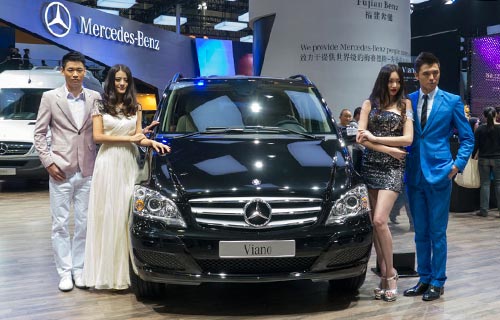
Getting a piece of the official car business has been the goal of both multinational and local Chinese brands. The estimated 2 million official cars on the road and increasing annual government spending on new cars and maintenance and repairs means big business for OEMs and dealers. More importantly, the brand image of an official car helps attract large numbers of business people to purchase the same makes and models.
The new regulation, Articles of Austerity and Anti-Waste for Party and Government Institutions, is meant to fight against official waste, extravaganza and corruption. It calls for the abolition of "ordinary official cars," which refers to vehicles purchased by Party and government institutions below the ministry or provincial level.
Under pressure from the general public, China has tried for more than 20 years in reforming the system of official cars with little results. The recent decision by the new leaders seems to be addressing the root of the official car problem: extravaganza and corruption.
Once implemented, the new regulation will significantly affect future market demand. For one thing demand for larger and more luxury cars will decline. For another, multinational and Chinese OEMs that have been targeting the official car business will be forced to change their strategy in product design and development to meet growing demand of ordinary consumers.
 IDEO
IDEO

|
|

|
|
 HOTO
HOTO
|
|
|
|
 EWS BY BRAND