Road to top is rough for domestics


|
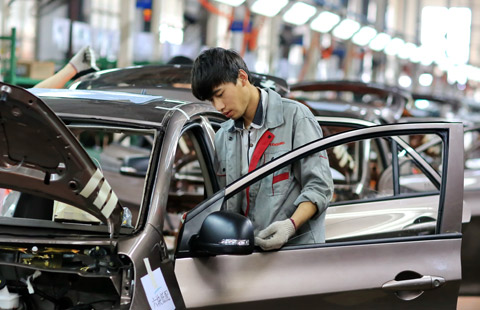
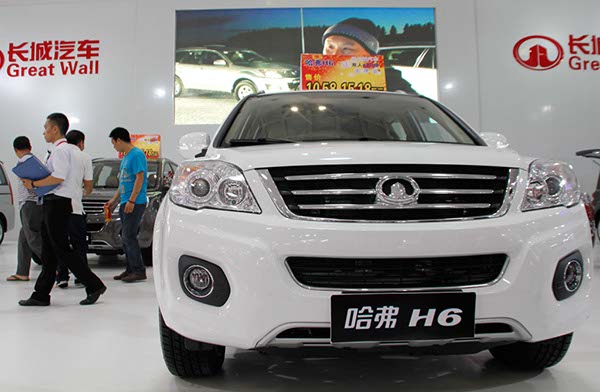
Despite the gloomy market for domestic brands, China's largest SUV maker Great Wall Motor sold 367,857 vehicles in the first half of this year. [Shi Yan / for China Daily] |

Weak brands fight for scraps in foreign-dominated market
For a while now, the Chinese government has set its sights on making the nation a powerful player in the auto industry.
Its end goal is to foster a group of domestic automakers that have brands capable of competing on the global stage.
Given the fact China is the largest auto market on the planet, achieving that ambition would appear to be simply a matter of time.
However, the gap between the dream and reality has not really narrowed much on the ground in recent years.
Consider the share of Chinese brands in the domestic passenger vehicle market-after declining for several quarters, it jumped to a new high of 36 percent in the fourth quarter of 2012.
But in the second quarter of 2013, it fell to 30 percent, which was lower than it had been throughout most of 2012, according to statistics from the China Association of Automobile Manufacturers.
Fundamental problems
The situation leaves many automakers pondering the way forward.
One place to start would be to address a few fundamental problems in the industry.
First, the market space is too fragmented for domestic brands.
Although nearly 70 percent of the Chinese passenger vehicle market is dominated by foreign brands, Chinese brands still have a total market space of around 4 million units, which surpasses the total market size of most countries.
But with more than 40 domestic brands competing, the average annual sales per brand total less than 100,000 units.
Even in the world's biggest market, local automakers are still unable to achieve an economy of scale, which is considered one of the keys to success in this industry.
Consolidation is frequently pushed by the government, but who comes out on top when this happens?
Will it be State-owned companies like FAW and Dongfeng, which are backed by the government in the mergers and acquisitions?
Or private companies like Great Wall and Geely, which have more potential in the marketplace?
The possibility of a solution to this deadlock seems slim in the coming years.