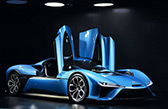
VW's XL1, which draws heavily on aerodynamics, is powered by a 0.8 liter twin-cylinder engine. That substantially undercuts the fuel consumption of the 1 liter three-cylinder Up! mini, VW's smallest and cheapest production car to date.
Peugeot's Hybrid Air system, developed with German supplier Robert Bosch, will use a separate hydraulic motor driven by nitrogen compressed by energy recovered from braking.
Fuel-cell hope
Longer-term relief may come from cars driven by hydrogen fuel cells, which can cover much longer distances on a single top-up and refuel more quickly than battery cars.
Fuel-cell vehicles, in common with rechargeable models such as Nissan's Leaf, are propelled by electric motors. Instead of a battery, however, a "stack" of cells combines hydrogen with oxygen to generate the electricity.
Daimler, Ford and Nissan have announced joint plans to launch affordable fuel-cell cars within five years, while Toyota and BMW aim to do so by 2020.
But even if those goals are met, initial sales volumes are unlikely to make a significant contribution to the next round of EU-mandated CO2 cuts, experts say.
To make up the difference, carmakers have little choice but to squeeze more gains from existing engines as the costs and risks of developing breakthrough technologies are too high for most, said Klaus Stricker, a consultant with Bain & Company.
"I don't expect anything new to come into play in the next five to ten years," Stricker said.
Output of the XL1 - VW is planning to build 250 this year - will be too low to make a dent in the German group's fleet emissions any time soon. But the vehicle, touted by its maker as the world's most fuel-efficient production car, could be used by VW to push for "supercredits" with the European Commission.
Supercredits allow manufacturers to produce a quota of cars that exceed the CO2 target if they also make vehicles with very low emissions. German carmakers have most to gain from this because they could reduce the changes to their luxury cars.
Their poorer mass-market cousins, however, face a more fundamental challenge.
"There's more and more regulation, but customers want to pay less and less," Nissan's Bancon said. "So we have to cut prices and increase technology content - that's the headache we're faced with."

Copyright 1995 - . All rights reserved. The content (including but not limited to text, photo, multimedia information, etc) published in this site belongs to China Daily Information Co (CDIC). Without written authorization from CDIC, such content shall not be republished or used in any form. Note: Browsers with 1024*768 or higher resolution are suggested for this site.
License for publishing multimedia online 0108263 Registration Number: 20100000002731