|
|
|
 |
|
|
|||||||||
|
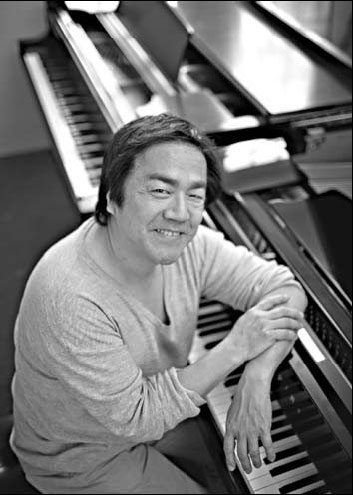
John Kao, an innovation adviser, says successful companies are driven by creative thinkers. Peter DaSilva for The New York Times |
In the hunt for innovation, that elusive path to economic growth and corporate prosperity, try a little jazz as an inspirational metaphor, says John Kao, an innovation adviser to corporations and governments.
Jazz, Mr. Kao says, demonstrates some of the tensions in innovation, between training and discipline, and improvised creativity. In business, as in jazz, the interaction of those two sides, the yin and the yang of innovation, fuels new ideas and products.
Mr. Kao, who is also a jazz pianist, points to the very different models of innovation represented by Google and Apple, two powerhouses of Silicon Valley, the world's epicenter of corporate creativity.
The Google model relies on rapid experimentation and data. The company constantly refines its search, advertising marketplace, e-mail and other services, depending on how people use its online offerings. It takes a bottom-up approach: customers are participants, essentially becoming partners in product design.
The Apple model is more edited, intuitive and top-down. When asked what market research went into the company's elegant product designs, Steven P. Jobs had a standard answer: none. "It's not the consumers' job to know what they want," he would add. The Google-Apple comparison, Mr. Kao says, highlights the "archetypical tension in the creative process."
Google speaks to the power of data-driven decision-making, and of online experimentation and networked communication. The same Internet-era tools enable crowd-sourced collaboration as well as the rapid testing of products ideas - the essence of the lean start-up method.
The benefits are apparent in markets like Internet software, online commerce and applications for smartphones and tablets.
Yet breakthrough ideas still come from individuals, not committees.
"There is nothing democratic about innovation," says Paul Saffo, a veteran technology forecaster in Silicon Valley. "It is always an elite activity, whether by a recognized or unrecognized elite."
The labs at General Electric are trying to quicken the pace of innovation - but this is long-cycle innovation, since G.E.'s power generators, jet engines and medical-imaging equipment last for decades. G.E. is opening a software center in California to make its machines more intelligent with data-gathering sensors, wireless communications and predictive algorithms.
The goal is to develop machines, such as jet engines or power turbines, that can alert their human minders when they need repairs, before equipment failures. G.E. works with corporations, government labs and universities on hundreds of collaborative projects.
Apple's smartphones, tablets and computers typically have life spans measured in a few years instead of decades, with new models introduced regularly.
But like G.E., Apple is in the hardware business, where innovation cycles are beholden to the limits of materials science and manufacturing.
Apple's physical world is far different from Google's realm of Internet software, where writing a few lines of new code can change a product instantly. The careful melding of hardware with software in Apple's popular products is a challenge in multidisciplinary systems design that must be orchestrated by a guiding hand - though it will no longer be the hand of Mr. Jobs, who died last October.
Apple has also repeatedly displayed its openness to new ideas and influences, as exemplified by the visit that Mr. Jobs made to the Palo Alto research center of Xerox in 1979.
He saw an experimental computer with a point-and-click mouse and graphical on-screen icons, which he adopted at Apple. It became the standard for the personal computer industry.
Apple and Google pursue very different paths to innovation, but the gap between their two models may be closing.
In the months after Larry Page, the Google co-founder, took over as chief executive officer last April, the company eliminated a collection of more than two dozen projects, a nudge toward top-down leadership.
And Timothy D. Cook, Apple's C.E.O., is likely to be a more bottom-up leader than Mr. Jobs.
"What we're likely to see," Mr. Kao says, "is Google and Apple each borrowing from the playbook of the other."
The New York Times