|
 |
|
GUILLERMO MUNRO/FENG XIUXIA/CHINA DAILY |
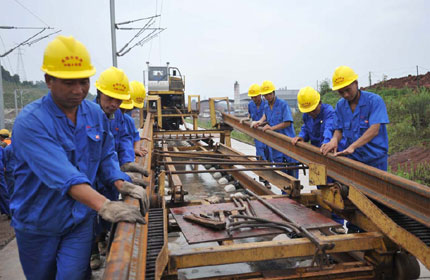
In a departure from their predecessors, a new generation of Chinese migrant workers is showing a greater preference for working in manufacturing rather than in the construction industry.
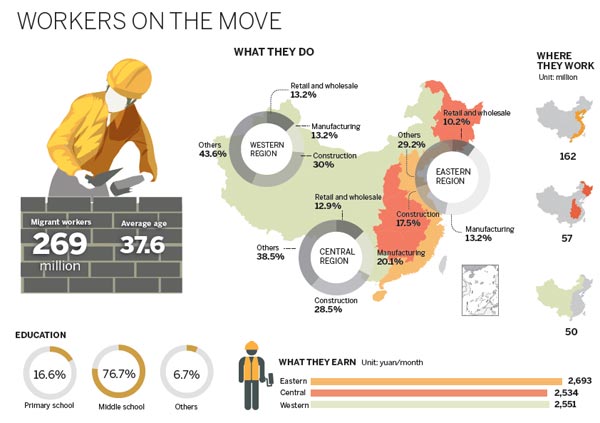
The 2013 National Migrant Worker Monitoring Survey, released by the National Bureau of Statistics on Monday, reported a total of 269 million migrant workers in China at the end of 2013, a 2.4 percent year-on-year increase. Of these workers, 46.6 percent were born after 1980.
About 39 percent of the younger workers are employed in the manufacturing sector, while only 26.5 percent of older workers work in this industry. On the other hand, only 14.5 percent of the younger generation toils in the construction industry, less than half the number of the senior workers.
|
 |
 |
"For one thing, they usually think the job, which requires hard work and is dirty most of the time, is unacceptable. For another, such craftsmanship is not easy to pick up; it usually requires two years' apprenticeship. Therefore, young people would rather go to a factory and work on the assembly line," Mu said.
On the other hand, Zhang Beilei, general manager of Wenzhou Gaotian Shoe Co, said it has been easy to find workers for her company.
"Take a walk around at the assembly lines at the factory," she said. "You will see mostly young faces. While the supposed labor shortage has been discussed quite heatedly in recent years, most of those who come to us for jobs each year after the Spring Festival are young people born in the 1980s," she said.
The NBS survey also found that the younger generation is better educated than their predecessors. About one-third of the younger migrant workers—19.2 percent more than the older workers—have at least a senior high school diploma.
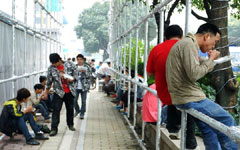
They also are more willing to stay in cities where they find work. About 54.9 percent of the younger workers live in prefecture-level cities, while the rate for the older cohort is merely 26 percent.
"Instead of working as their predecessors did, like migrating birds—going out for work and taking the money back home—the younger generation has received a better education so they want to be part of the city they are now living in," said Yuan Liang, director of the executive office of Andemen Labor Market, one of the largest in Nanjing of East China's Jiangsu province.

Copyright 1995 - . All rights reserved. The content (including but not limited to text, photo, multimedia information, etc) published in this site belongs to China Daily Information Co (CDIC). Without written authorization from CDIC, such content shall not be republished or used in any form. Note: Browsers with 1024*768 or higher resolution are suggested for this site.
License for publishing multimedia online 0108263 Registration Number: 20100000002731