Comments
  Print
Print  Mail
Mail  Large Medium Small
Tang Liming: The aim of the system reformation is to enable more people to enjoy the equalization of public services in China. In regards to your question, I think the most effective way is to start implementing from medium-sized cities. Why? Because cities like Beijing or Shanghai, they already have a population of over 20 million, due to the carrying capacity of the population, it is difficult for them to include more of the population via the opening-up policy of the household registration system.
The traffic congestion may get worse as well as the pollution. So I think it is unrealistic to completely soften the restriction of the household registration system in tier one cities. However, in small cities, although they usually have more unoccupied land, they cannot offer massive job opportunities. If people are moving towards small cities with work opportunities, they have no reason to stay there.
At the present moment, the original method that we use to develop our urbanization can be described as excessive expansion. The development rate and scale both exceed the speed limit. During the process of these developments, local governments are driven by local public finance, GDP growth rate, and other factors. They just focus on short-term benefits and simply consider urbanization as construction of high buildings and large mansions. And what they have ignored is the culture of the city as another important new source of economic growth.
To a city, culture is a very valuable asset that can be distinguished from other cities. Then, how to take full advantage of the intangible value in the process of utilization?
I think Chengdu has made a good example.
Formally speaking, what they have done to reconstruct the original lanes and alleys of the city is actually preserving the tradition, combining the culture of the city with commercial operation very well. In the reconstruction area, the values of the land have increased higher than before and even higher than the pure construction of high buildings and mansions.
To be honest, I think what they have achieved in Chengdu is just at a preliminary stage in using the cultural assets. Japan did better in this area. We have done research on the cases in Japan. To protect the traditional culture, relying only on commercialized development and operation of the market are not enough, government's policies have played a supporting role at the same time.
Such as during the transitional holidays, if your clans or families plan to celebrate in customary rites and ceremonies, your company will offer you extra holidays to encourage young people to engage in the heritage and protection of traditional culture. The transformation of cultural protection has developed in daily life and not just through the protection of historical buildings.
In terms of this issue, I think we have to learn from Japan.
China Daily: Brilliant, thanks, Dr. Tang
Tang: You are welcome!
China Daily: As you just mentioned, Chengdu is a typical model for China's urbanization, and I believe that every city in China will figure out their own methods to match their unique regional characteristics. Thank you again for joining us today.
Tang: My pleasure!
 4th World Internet Conference concludes
 Starbucks Reserve Roastery set to open in Shanghai
 Smile to get discounts in Tmall's unmanned supermart
 Top 10 richest Chinese women in 2017
 World leading internet sci-tech achievements released in Wuzhen
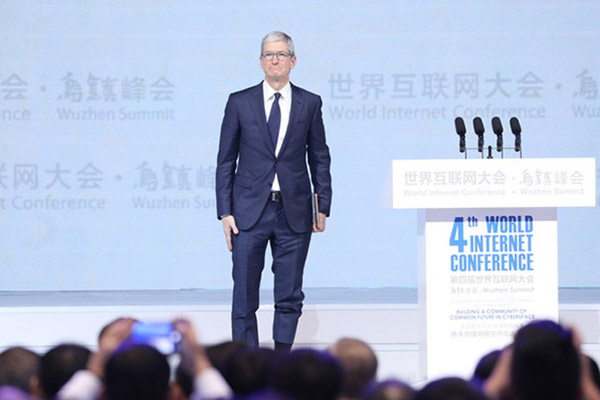 Top tech CEOs take to the stage as Wuzhen Summit opens
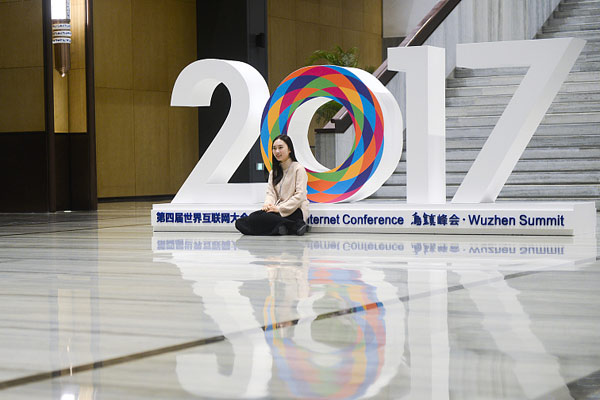 Major topics at 4th World Internet Conference
 'Made in China' dinosaurs amuse the world

Copyright 1995 - . All rights reserved. The content (including but not limited to text, photo, multimedia information, etc) published in this site belongs to China Daily Information Co (CDIC). Without written authorization from CDIC, such content shall not be republished or used in any form. Note: Browsers with 1024*768 or higher resolution are suggested for this site.
License for publishing multimedia online 0108263 Registration Number: 20100000002731