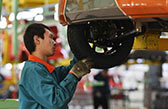
Changing labor demand shows China manufacturing hub upgrade


GUANGZHOU - In the busy spring recruitment season in China's manufacturing hub of Guangdong, job vacancies in the traditional manufacturing sector decline, but the demand for technical personnel increases.
The general demand for labor in manufacturing has been surpassed by other sectors and tends to decline further, according to a local major recruitment agency.
"I thought it would be good if my son found work as a manager in a factory in Guangdong but, unexpectedly, he tried jobs as a courier and a seller of phones and even real estate," said Liu Guangli, a migrant worker from Central China's Hunan province.
To the father's growing astonishment, the son then resigned from his job in Guangdong and went back to Hunan to start his own business with friends.
Development of China's central and western regions is one factor in the dwindling flow of migrant workers into Guangdong, as there are now many opportunities in their home provinces. Some manufacturers have moved inland to reduce costs.
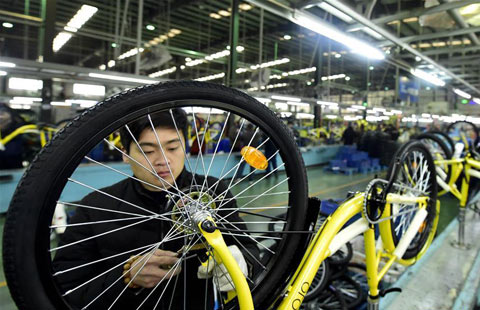
Another factor is the growing demand for technical personnel and declining need for unskilled or semi-skilled workers, a result of the use of robots, automated assembly lines and the growth of high-tech companies.
"We automated about 70 production lines, which means 60 to 70 percent fewer workers," said Liu Jiwen, vice president of a Shenzhen producer of phone parts. Liu's company once experienced labor shortages, which prompted him to invest heavily in reducing his demand for assembly workers.
Dongguan city, also in Guangdong, is in the same boat. In December 2015, the city's enterprises employed an average of 31 workers each, or 5.3 million workers in total. By December 2016, that average had fallen to around 27.
High-tech firms need high-quality staff. The number of high-tech companies in Guangdong's Pearl River Delta region, a manufacturing center, reached 18,880 in 2016, up 78.8 percent over 2015.
Vacancies for skilled and technical personnel accounted for 18.2 percent of the total in the province last year, up from 15.5 percent in 2015.
Thanks to transformation, the proportion of skilled workers in factories in Hengli township of Dongguan, jumped from 15 percent in 2013 to 35 percent last year, said Liu Yingqiang, deputy head of the local human resources bureau.
Companies are doing more to keep workers happy in order to prevent job-hopping.
"Compared with 2016, the salaries of unskilled workers are almost unchanged, but intermediate technical workers see salaries rise," said Li Hanzhang, director of the Guangzhou human resources market service center.