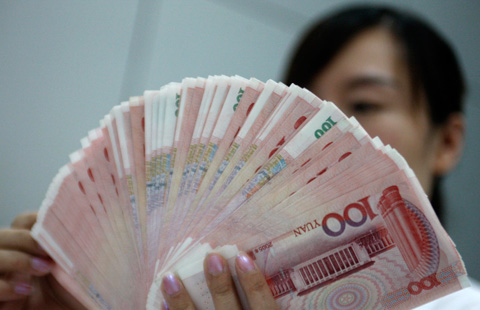
BEIJING - Tropical fruit from Thailand, Vietnamese coffee and Sri Lankan jewelry may not have much in common, but they are making their way into the Chinese market thanks to growing shared interests and market demand between China and its neighboring south and southeast Asian countries.
Home to nearly half of the global population, China and South Asia stood out amid the gloomy global economy each boasting an enviable growth rate of 6.9 percent last year.
By the end of 2015, China's direct investment in south Asian countries stood at $12.29 billion, and South Asia's investment in China was $890 million, according to data from the Ministry of Commerce (MOC).
Last year, trade grew 4.9 percent from the previous year to $111.22 billion between China and eight members under the South Asia Association for Regional Cooperation initiative - including Nepal, India, Bangladesh, Bhutan, Pakistan, Sri Lanka, Maldives and Afghanistan - according to the MOC.
China inked contracts worth $21.28 billion with south Asian countries in 2015 mainly for power plants, communication and road projects, up 82.1 percent from the previous year.
Chen Lijun, director of the Institute for South Asian Studies at the Yunnan Academy of Social Sciences, said China, and southeast and south Asian countries are now at different stages of development and there are a lot of ways in which they can complement each other.
They must tap into each other's comparative advantages to realize mutual beneficial opportunities and common prosperity, Chen said.
Vice Premier Wang Yang said during the fourth China-South Asia Expo in June in Kunming, capital of southwest China's Yunnan Province, that China was willing to enhance cooperation with countries in South Asia in the fields of customs, quality inspection, e-commerce and transportation.
China will establish free trade areas with those countries and increase imports from them, Wang said, adding that the country will support domestic companies to conduct production cooperation in South Asia to aid industrialization.
China is also willing to accelerate the formation of economic corridors between China and South Asian countries to enhance economic and trade cooperation, he said.
Cooperation in tourism should also be enhanced by simplifying cross-border procedures and encouraging the joint promotion of tourism resources, Wang said.
Yao Yang, head of the National School of Development of Peking University, said that the Belt and Road Initiative had secured economic ties between China and south Asian countries, bringing them much closer and securing bright cooperation prospects.
The Belt and Road Initiative, proposed by President Xi Jinping in 2013, refers to the Silk Road Economic Belt and the 21st Century Maritime Silk Road - a trade and infrastructure network connecting Asia with Europe and Africa along ancient trade routes.
A round of key projects has been launched following the Belt and Road Initiative, including economic corridors between China and South Asian countries, which have generated new growth impetus for their regional economies and lowered investment costs, said Yao.
Chen Lijun also suggested accelerating the progress of international e-commerce, Internet of Things, cloud computing and big data to develop an information economy between China and South Asian countries in the long term.
China should continue to encourage its enterprises to invest abroad while southeast and south Asian countries should also optimize their investment environments to accommodate Chinese investors, he said.


Copyright 1995 - . All rights reserved. The content (including but not limited to text, photo, multimedia information, etc) published in this site belongs to China Daily Information Co (CDIC). Without written authorization from CDIC, such content shall not be republished or used in any form. Note: Browsers with 1024*768 or higher resolution are suggested for this site.
License for publishing multimedia online 0108263 Registration Number: 130349