BEIJING - A string of economic data for China in July came in slightly lower than expectations, as widespread flooding disrupted business activity and continued economic restructuring and reform experienced growing pains.
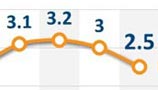
The pace of fixed-asset investment slipped to 8.1 percent in the January-July period, the lowest growth in over a decade, from a 9-percent increase in the first half of the year, according to data released by the National Bureau of Statistics (NBS) Friday.
Growth of industrial production and consumption also softened. Value-added industrial output expanded 6 percent year on year in July, slower than the 6.2 percent increase for June. Retail sales growth eased to 10.2 percent after a rise of 10.6 percent the previous month.
Commenting on the data, NBS spokesperson Sheng Laiyun said the shape of China's economy has some ups and downs, but the underlying trend remains positive.
The economy was running within a reasonable range despite headwinds at home and abroad, he said.
China has been trying to wean the economy off its over-reliance on exports and investment, toward a growth model that drains strength from consumer spending, innovation and services sector.
According to Sheng, economic restructuring is at a "crucial stage," and some of the reform policies were starting to work, weighing on economic growth in the short term.
Economic growth held steady at 6.7 percent in the second quarter, the lowest level since the 2009 global financial crisis but still within the government's target range of 6.5-7 percent for 2016.
Amid downward economic pressure, China has resisted the temptation of temporary fixes like aggressive monetary easing. Instead, it chose structural reform as the tool to put the economy on a more sustainable path.
To push supply-side structural reform, the country prioritized the tackling of industrial overcapacity, reduction of housing inventories, deleveraging to defuse financial risks and lowering companies' financing costs.
The slowing fixed-asset investment growth for the first seven months was dragged by a 22.9 percent fall in the mining sector, indicating the government's efforts to cut coal and steel overcapacity are working.
Property development investment growth slowed to 5.3 percent in the January-July period, from 6.1 percent in the first half.
Private sector investment climbed 2.1 percent in the first seven months, slowing further from an already weak 2.8-percent rise in the first half.
Sheng attributed the continued weakness in private sector investment, which accounts for 61.4 percent of total fixed-asset investment, to the slowdown in export manufacturing, entrance barriers for private companies in some sectors, limited access to loans and widespread flooding in some areas.
Investment growth by state-owned enterprises also slowed to 21.8 percent in the first seven months, from 23.5 percent in the first half.
Infrastructure investment jumped 19.6 percent during the period, decelerating from 20.9 percent in the first half.
Breakdown of Friday's data shone a light on the economy as new development dynamics gained steam, with new industries, new technologies, new services and new business models prospering.
Output of the high-tech industry climbed 12.2 percent in July, accelerating from June's 10.6-percent increase. New energy car production grew 52.5 percent in July. Revenues of strategic emerging services gained 15.6 percent year-on-year in the first half, according to NBS data.
However, Sheng noted the new economy was not strong enough to pick up the slack.


Copyright 1995 - . All rights reserved. The content (including but not limited to text, photo, multimedia information, etc) published in this site belongs to China Daily Information Co (CDIC). Without written authorization from CDIC, such content shall not be republished or used in any form. Note: Browsers with 1024*768 or higher resolution are suggested for this site.
License for publishing multimedia online 0108263 Registration Number: 130349