BEIJING - Some Western countries have pressured China hard lately on the excess capacity in its steel sector, hoping to protect their self-interests and gain more in trade negotiations with China. Whatever interests they pursue, they should be fair-minded.
Excess capacity as an economic term should not be abused. In almost all markets, it is natural for enterprises, especially profitable ones, to maintain some extra capacity. The reason is demand tends to fluctuate over time, and that they want to capture as large a share of the market as they can and make the most when still better time comes.
The huge steel capacity the world has today was spurred by a strong demand in the earlier booming cycle -- both in China and across the world. Many of the steel firms, including those in the United States and Europe, as well as the iron ore exporting economies, benefited from the boom.
At the development stage back then, the Chinese economy happened to be an important driver. But it is nothing to be ashamed of. China's housing market took off in the early 1990s and almost all the 1.3 billion people in the country were housed properly within 20 years.
Even as the rest of the world fell into an economic downturn, the housing demand in China persists, though its growth has been slower. This is mainly because China has a shortage of infrastructure.
Should China be blamed for increasing spending in infrastructure at a time of external economic downturn? In truth, such investment in infrastructure not only helped cushion China from the shock of a sharp slowdown in external demand, but also helped the world economy by contributing demand and growth that the world desperately needed. And most importantly, there was a solid infrastructure demand.
The market cycle is unstoppable. The lower housing demand in China unfortunately coincides with the prolonged sluggish growth across the major advanced economies.
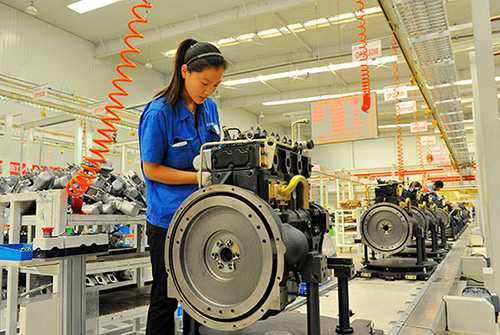
China did not specifically choose to support the steel sector when it increased fiscal spending amid the downturn. Rather, its steel sector expanded thanks to advantages in terms of cost and closeness to the market as well as the strong profitability.
Excess capacity, or rather a weak demand, is a shared challenge. World economies should make concerted efforts to solve it instead of pointing fingers at any one in order to create a pretext for practicing protectionism.


Copyright 1995 - . All rights reserved. The content (including but not limited to text, photo, multimedia information, etc) published in this site belongs to China Daily Information Co (CDIC). Without written authorization from CDIC, such content shall not be republished or used in any form. Note: Browsers with 1024*768 or higher resolution are suggested for this site.
License for publishing multimedia online 0108263 Registration Number: 130349