 |
|
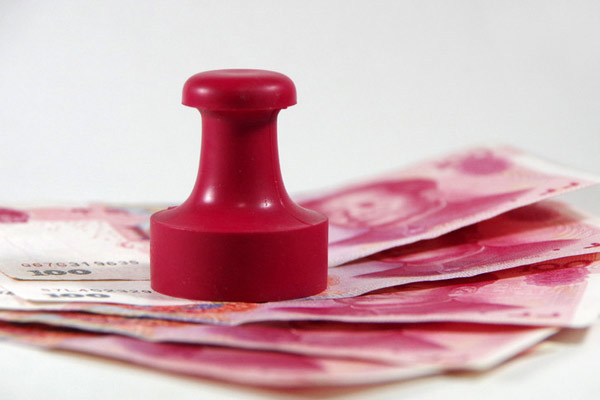
File photo shows a seal placed on several 100 yuan notes.[Photo/IC] |
One month before the May 1 deadline of a sweeping reform that seeks to replace China's decadeslong business tax with a value-added tax, Li visited the State Administration of Taxation and the Ministry of Finance on Friday, making sure tax-reduction measures are in place to benefit numerous enterprises.
Beginning on May 1, the country's business-tax-to-VAT pilot program, which began four years ago, will expand to the remaining four sectors — property, construction, finance and consumer services — which involve at least 10 million companies. Together they contribute 80 percent of China's total business tax revenue.
An 11 percent VAT will be levied on construction and real estate companies, while a 6 percent rate will be imposed on finance and consumer service sectors. In addition, VAT deductions will cover all of enterprises' new real property, the State Administration of Taxation and the Ministry of Finance said last month.
"The business-tax-to-VAT reform is key to ensuring the effectiveness of the proactive fiscal policy, and to pressing ahead the structural, especially supply-side, reform for this year," Li said. "If this is well done, the real economy will be more vital."
The premier said China had augmented the government deficit this year, and the increase — 560 billion yuan ($86.45 billion) more than last year, to 2.18 trillion yuan — is meant primarily to cover tax reductions for enterprises following the tax reform.
The reform measures will alleviate the tax burden on enterprises by over 500 billion yuan, Li said.
The reform will bolster the development of the service sector, which contributed more than half of the country's gross domestic product last year.
The country has imposed a value-added tax on tangible goods, with services being subjected to a business tax imposed on a company's sales, including costs, thus resulting in double taxation.
Unlike a business tax, a VAT avoids double taxation by taxing only the difference between a commodity's price before taxes and its cost of production.
By eliminating repeated taxation, the reform will unify the country's taxation system and help create a fair market environment, Li said.
Zhu Qing, a finance professor at Renmin University of China in Beijing, said expanding VAT reform will help cut the price of goods and services and ultimately benefit consumers.
Hu Yijian, a tax professor at Shanghai University of Finance and Economics, said China's ongoing taxation reform may help blaze a trail in terms of taxing the finance sector.
Most countries exempt VAT on financial products, but China's financial services will be subjected to VAT under new reform measures.
"Therefore, China may discover ways that will be useful to other countries in this endeavor," Hu said.


Copyright 1995 - . All rights reserved. The content (including but not limited to text, photo, multimedia information, etc) published in this site belongs to China Daily Information Co (CDIC). Without written authorization from CDIC, such content shall not be republished or used in any form. Note: Browsers with 1024*768 or higher resolution are suggested for this site.
License for publishing multimedia online 0108263 Registration Number: 130349