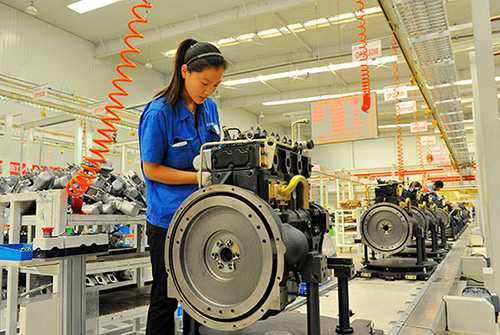
BEIJING - When Zhou Jiangtao joined Ansteel Heavy Machinery Co Ltd, he expected the life of stability and good salary traditionally guaranteed by State-owned companies.
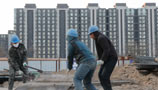
So when the company started laying off workers in late 2015, it took a while for the 38-year-old worker to adjust.
"Factories were barely rolling because there were very few orders for steel products," Zhou said. "Some of us chose to find new jobs, some just retired in advance."
China's steel enterprises are experiencing severe economic stress as factories halt production and workers are laid off.
The Purchasing Managers' Index of the steel industry reached 49 in February, the 22nd month it stood below 50, according to the Steel Logistics Professional Committee. A reading above 50 indicates expansion, while a reading below that level signals contraction.
Sagging demand has already impacted China's steel industry. The State Council, China's Cabinet, announced earlier last month that crude steel production capacity will be slashed by 100 million tons to 150 million tons over the next five years.
The situation is so severe that the government predicts some 500,000 workers in the industry will be laid off.
In Tangshan Songting Iron & Steel Co Ltd (TSIS), one of the country's biggest steel makers in northern Hebei Province, six huge blast furnaces sit deserted, with only a few workers looking after the quiet factories.
The company halted production in November last year, with more than 6,000 workers forced to stay idle. According to the Futures Daily, TSIS reported 474 million yuan ($73 million) in losses in the first nine months of 2015.
The company failed to pay 97 million yuan in electric bills, according to an article in the National Business Daily.
In Hebei's Tangshan city, the heartland of China's steel production, 14 out of 32 local steel makers reported a debt to assets ratio of at least 70 percent, according to a survey by the Tangshan Steel Association in late 2015, higher than the national average of 69.32 percent.
"A lot of steel makers will be wiped out of the market once their capital chains are broken," said Zhang Pin, a researcher with the Tangsong Steel Economic Research Institute.
Excess capacity
For years, China remained the world's biggest steel producer, but its capacity is growing too large.
In Tangshan, where local authorities relied on the steel industry to bolster economic growth, steel production increased to 105 million tons in 2014 from 59 million tons in 2008, higher than all of Europe combined, according to the local steel association. Tangshan is home to China's biggest steel production base.
The boost to economic growth has driven many enterprises in the city to jump on the steel bandwagon, with scores of blast furnaces constructed. In 2012 alone, 18 new furnaces were built, contributing to 23.3 million tons of added capacity, according to the China Iron and Steel Association (CISA).
But demand for steel is sagging. According to statistics released by research company Rhodium Group, global steel production increased 57 percent from 2004 to 2014, with China contributing 91 percent to that growth.

Copyright 1995 - . All rights reserved. The content (including but not limited to text, photo, multimedia information, etc) published in this site belongs to China Daily Information Co (CDIC). Without written authorization from CDIC, such content shall not be republished or used in any form. Note: Browsers with 1024*768 or higher resolution are suggested for this site.
License for publishing multimedia online 0108263 Registration Number: 130349