Local governments in China have set flexible growth ranges as they gear up for structural reform.
Of all the GDP growth targets of 31 provincial regions this year, nine have set "growth ranges" instead of specific numbers, according to a report carried this week by the China News Service.
Shandong, Jiangsu and Guangxi all set their growth targets between 7.5 percent to 8 percent, while Guangdong, Zhejiang and Hainan set theirs from 7 percent to 7.5 percent, according to the report. Shanghai and Jilin set theirs between 6.5 percent and 7 percent, while Heilongjiang has the lowest target of 6 percent to 6.5 percent.
"Premier Li Keqiang mentioned the concept of a 'reasonable range' in the 2014 government work report, but this is the first time that multiple local governments have set ranges," Li Xuesong, a researcher with the Chinese Academy of Social Sciences, told newspaper "China Times."
Flexible growth ranges are part of structural reform as China's economy slows. China's economy grew by 6.9 percent year on year in 2015, its slowest annual expansion in a quarter of a century.
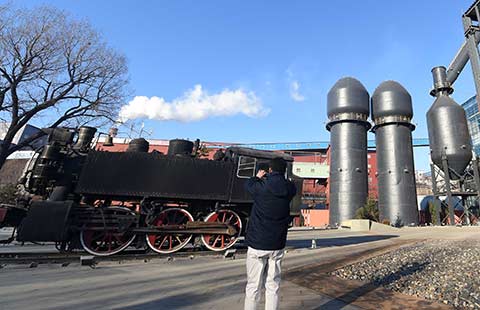
Many localities in China are already experiencing a slowdown. Growth of Liaoning Province, for example, dipped to a mere 3 percent last year. The northeastern province, heavily dependent on heavy industry, used to support China's economy with great economic growth.
"Pursuing GDP growth by measures such as expanding capacity and encouraging the property market is not sustainable," said Sun Zhiming, head of the Jilin Academy of Social Sciences. "Structural changes are inevitable."
Cutting overcapacity and destocking could cause temporary economic fluctuations, which is why the ranges are needed. Sun added that flexible ranges leave more room for structural reform and industry upgrade.
"With flexible targets, local governments can focus more on structural reform, which will be beneficial for longer-term development," said Ding Yuanzhu of the Chinese Academy of Governance. National GDP growth may also be set within a flexible range, Ding said.
Structural reform is gaining steam in China. This year, many provinces and municipalities have plans to cut overcapacity, de-leverage and reduce housing inventories. For instance, in east China's Anhui Province, the government will "properly handle overcapacity," "lower costs for enterprises" and "enhance consumption."
In Anhui, many major industries -- steel, coal, cement and iron ore -- are facing excess capacity. Last year, the Magang Group Co Ltd, a major iron and steel producer, suffered several billion yuan in losses.
In northeast China, where growth is the weakest, officials plan to bring their economies back on track with the service industry. For instance, in Jilin skiing is seen as a source of growth. Miaoxiangshan Skiing Resort has recently been branded a national skiing field, becoming a favorite winter holiday spot.
"In the past, people in Jilin could only go to the Jingyuetan Ski Resort to experience the fun of skiing, but now many similar resorts have sprung up," said Wang Yong of Miaoxiangshan resort.
"Setting flexible growth targets, cutting overcapacity and promoting the service industry all form part of structural reform, which will help China out of the slowdown in the long run," Sun Zhiming said.

Copyright 1995 - . All rights reserved. The content (including but not limited to text, photo, multimedia information, etc) published in this site belongs to China Daily Information Co (CDIC). Without written authorization from CDIC, such content shall not be republished or used in any form. Note: Browsers with 1024*768 or higher resolution are suggested for this site.
License for publishing multimedia online 0108263 Registration Number: 130349