 |
|
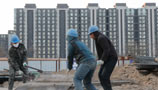
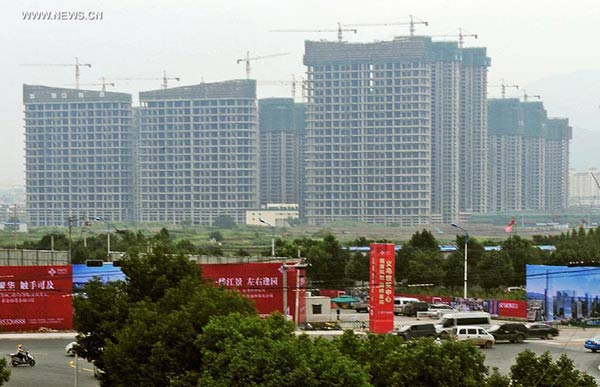
Photo taken on Sept 23, 2014 shows a real estate under construction in Yiwu, East China's Zhejiang province.[Photo/Xinhua] |
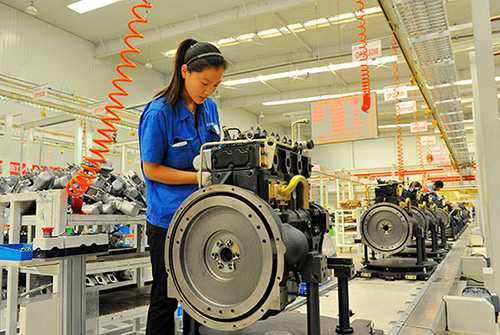
China is setting its sights on its 274 million migrant workers as a savior for the economy, as they have the potential to reduce the vast stockpile of unsold homes.
Reforms to make that happen could have far-reaching impact, analysts said.
The Communist Party of China Central Committee, the Party's top decision-making body, identified major tasks on Monday for the government's economic work in 2016. Among them, transforming migrant workers into "new urbanities" with full-fledged rights is highlighted.
"Housing system reform should cater to new urbanities" to "boost effective demand and stabilize the housing market", the Committee said.
The statement, likely to influence the agenda of Friday's Central Economic Work Conference, represented a shift in focus to bring China's vast untapped population into play for the economy, and it aligns with the existing goal of dissolving China's housing inventory, as urged by President Xi Jinping a month ago.
It is also part of the economic "supply-side" reforms championed recently by top policymakers that aim to lift the country's productivity, analysts said.
Specifically, plans are being drawn to support farmers and migrant workers to purchase homes in third-and fourth-tier cities. Financial subsidies will be given to first-time homebuyers who have rural household residency, or hukou, according to Economic Information Daily, a newspaper affiliated with the official Xinhua News Agency.
Some local governments have acted before unified policies are in place.
For example, in Luoyang, Henan, farmers will be subsidized for their deed tax, while the first-year mortgage interest payment will be fully subsidized if they buy a home before the end of February.
For migrants, buying a home in smaller cities not only means a discount but a possible urban hukou, which is associated with employment, healthcare and, of particular importance, the right of their children to be enrolled in local schools. China's migrant workers are largely denied such entitlements simply because they don't have urban hukou.
Only 1 percent of migrant workers have bought homes in cities where they work, according to a survey by National Bureau of Statistics in 2014. Another survey by the bureau showed that in 2014 the average monthly income of a migrant worker was 2,864 yuan ($441), with expenditures running about 944 yuan. The saved money is typically sent back to their hometowns, where most expect to end up.
Ni Pengfei, a research fellow at the Chinese Academy of Social Sciences, estimated that if 70 percent of migrant workers bought homes in the cities where they work, China's 2.1 billion square meters of excessive inventory would be significantly depleted.
However, the government is looking beyond the property market. Zhu Zhongyi, vice-president of the China Real Estate Industry Association, said implementing the strategy will entail deeper institutional changes.
A change in the hukou system so that owning a home in a city is enough to qualify for an urban hukou is also needed, Zhu said.
"Many lower-tier cities now still require more than local home ownership to get a hukou," Ni said, pointing to the need for continuous work and social insurance payment records. "But that is difficult for many migrant workers because they work in larger cities and don't have those certificates."

Copyright 1995 - . All rights reserved. The content (including but not limited to text, photo, multimedia information, etc) published in this site belongs to China Daily Information Co (CDIC). Without written authorization from CDIC, such content shall not be republished or used in any form. Note: Browsers with 1024*768 or higher resolution are suggested for this site.
License for publishing multimedia online 0108263 Registration Number: 130349