Poverty reduction and social welfare
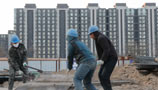
The new plan places more focus on equality, poverty reduction and social welfare. The government plans to eliminate poverty by end 2020, to pull the 70 million people under the current poverty line (annual income below 2,300 yuan at 2010 price, roughly equivalent to international poverty threshold of $1.9 per day at 2011 price PPP) out of poverty by the end of the five year period.
To help achieve a systematic poverty reduction, the government plans to provide free high school and middle-level vocational education to students from pool families, promote flexible employment and enhance minimum wage system, and improve social safety net. On the latter, the government targets full pension participation and full serious illness insurance coverage nationwide by 2020, and national pooling for basic pension.
To help finance such expansions, a portion of State-owned capital will be transferred to social security funds. The latter is also a part of the SOE reform that aims to separate state capital management from state enterprise management.
Opening up
The government plans to open up the economy further in the next five years. Foreign investment will be subject to pre-established national treatment and negative list system nationwide in the future, with services sectors opened further with simplified business procedures.
China's "go global" strategy is set to be prioritized around the "One Belt One Road" and deepening of global integration. The country's overseas investment is expected to continue growing rapidly in the next 5 years. China also wants to more pro-actively participate in international cooperation and global economic governance.
This includes the likely inclusion of the RMB in the IMF's SDR, the recent establishment of the Asia Infrastructure Investment Bank, and China's likely promotion of more bilateral and regional free-trade agreements, and establishment of more domestic free trade zones.
Relaxation of "one-child" policy
After three decades of implementation of the one-child policy, the government finally announced the removal of all restrictions on families having a second child nationwide. This come after decades of strict family planning led to the decline of working age population starting recently, a host of social issues, and a fast aging population. The partial relaxation of the one-child policy in urban areas since 2014 has led to a small but visible pick up in the birth of second child.
The relaxation will undoubtedly increase birth rate in China given that a portion of the population has not been able to have a second child. While increased child births may boost spending related to child-raising in the next few years, the impact will likely be relatively limited in the short-term.
Moreover, demographic changes tend to be very gradual, and Chinese women's current fertility intention is low. Given that birth rates in neighbouring East Asia economies are among the lowest in the world, it is possible that China's birth rate does not show a significant increase even after the relaxation of the one-child policy.
If one assumes that birth rate increases from the current 1.2 percent to 1.4 percent a year and be sustained at that rate, China's population aging process will be slowed significantly, with the population peaking at close to 1.6 billion people around 2050 rather than 1.4 billion around 2025-2030.
The article is written by UBS economists led by Wang Tao. The views do not necessarily reflect those of China Daily.

Copyright 1995 - . All rights reserved. The content (including but not limited to text, photo, multimedia information, etc) published in this site belongs to China Daily Information Co (CDIC). Without written authorization from CDIC, such content shall not be republished or used in any form. Note: Browsers with 1024*768 or higher resolution are suggested for this site.
License for publishing multimedia online 0108263 Registration Number: 130349