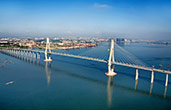
BEIJING - Jinjiang used to be a manufacturing boomtown, a place making shoes and garments for American and European supermarket shelves.
But these days, the city on China's southeast coast, like many of its manufacturing bases, is losing its edge because of rising wages and lack of product innovation.
"I'm considering moving to Bangladesh," said Lin Genghuang, a Jinjiang native who owns a shoe factory. "Business is barely holding up here."
Lin said the company's export volume is still climbing, but rising wages, the appreciation of the yuan and intense price competition are squeezing the already paper-thin profit margin.
After China's World Trade Organization accession in 2001, cheap labor has fueled its export boom and powered the economy to become the world's second largest. But China's manufacturing sector is running into problems these days: squeezed from one end by markets with even lower labor costs, such as Vietnam and Malaysia, and yet struggling to move to a higher value chain because of intensified competition from developed nations.
Some 3,000 km away from Jinjiang, in the northeastern city of Harbin, a deepening economic malaise is forcing companies to reinvent themselves to survive.
Harbin Boiler Company Ltd, a state-owned thermal power equipment manufacturer, is experiencing double blows -- the slowing economy and a national campaign to curb pollution and cut emissions.
With orders falling and profits shrinking, the company has no choice but to change, its president, Wang Dexing, said.
To improve competitiveness, the company is striving to develop new products, expand markets in emerging economies and tap into new businesses such as sea water desalination, nuclear power equipment and environmental protection.
This is a part of China's broader economic reality: Anemic economic momentum is driving the government to seek new sources of growth while forcing domestic and multinational companies to look for a Plan B.
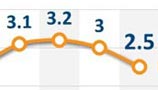
Weighed by a property market downturn, cooling investment growth and unsteady demand both at home and abroad, China's economy has stumbled during the past two years and is widely expected to post its weakest growth in a quarter of a century this year.
Although growth is slowing, it is more balanced and sustainable -- a "new normal," as it is called by Chinese President Xi Jinping.
Under the "new normal," the importance of growth speed is eclipsed by immensely complex structural reforms going on to transform the economy to one that relies more on the services sector, domestic spending and innovation.

Copyright 1995 - . All rights reserved. The content (including but not limited to text, photo, multimedia information, etc) published in this site belongs to China Daily Information Co (CDIC). Without written authorization from CDIC, such content shall not be republished or used in any form. Note: Browsers with 1024*768 or higher resolution are suggested for this site.
License for publishing multimedia online 0108263 Registration Number: 130349