"In Nigeria, electricity tends to be unreliable, so we have developed products that can freeze things for more than 100 hours even if there is no electricity."
Haier's products, including air conditioners, computers, freezers, refrigerators, TVs, washing machines and water heaters, are now sold in 30 countries in Africa.
Another Chinese home appliances brand, Hisense, has factories in Algeria, Egypt and South Africa.
It set up its South African factory, in Cape Town, in June 2013, and late last year started to export products including TVs and refrigerators made there to 10 other African countries, including Botswana, Malawi, Mozambique and Zimbabwe.
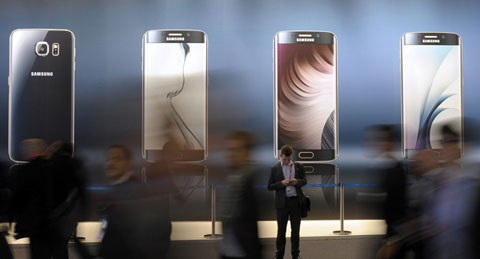
The company says that last year in South Africa it had already managed to grab 17 percent of the market for TVs and about 20 percent for refrigerators, making it the secondlargest seller of those products in the country, after Samsung of South Korea with TVs and KIC, a local brand, with refrigerators.
Hisense says it has built up an after-sales network that covers most South African cities, and its products are sold in more than 3,000 retail outlets.
The Cape Town factory can produce 400,000 TVs and 400,000 refrigerators a year, and it produced about half those numbers last year.
"Almost every model of Hisense TV is made locally," says Li Youbo, managing director of Hisense South Africa.
Hisense South Africa is in the process of planning for secondand third-phrase projects to expand its production capacity, he says.
Wang Lina, an agent in Kenya for the Chinese TV set brand Skyworth, says that customs duties in Africa can still be as high as 25 percent.
Wang, who started selling Skyworth products at the end of 2012, says his profit on TVs is now only 10 percent, and that this would increase if production lines were set up in Africa.
Currency fluctuations are something else that exporters need to take account of.
Fogliata of GfK says: "Import duties are sometimes high for some products, but currencies really have tended to fluctuate over the past few months, making imports-either components or full units-increasingly expensive."
Wang says he believes setting up a production line in Kenya is ideal because assembling TVs does not require highly skilled people.
In addition, many African countries, unlike China, enjoy preferential tariffs in Europe, meaning Chinese companies can not only make and sell their wares in Africa, but also export them to Europe.
Li, of Hisense South Africa, says: "Having a local manufacturing plant is a huge advantage, specifically to the Southern African Development Community countries that benefit from lower customs duties. Shipping times to most African countries are shorter than from China.
"Hisense SA also offers customers the flexibility to mix models in a container, which you can't do when importing from China. This will definitely help the company keep its costs down."

Copyright 1995 - . All rights reserved. The content (including but not limited to text, photo, multimedia information, etc) published in this site belongs to China Daily Information Co (CDIC). Without written authorization from CDIC, such content shall not be republished or used in any form. Note: Browsers with 1024*768 or higher resolution are suggested for this site.
License for publishing multimedia online 0108263 Registration Number: 130349