 |
|
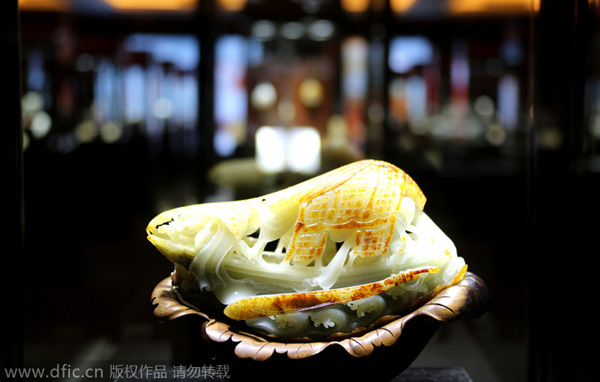
A jade artifact displays at an exhibition in Hefei, Anhui province, in October. [Photo/IC] |
Yang's business, mostly trading pieces of decorative jade weighing several hundred kilograms, is one of the largest in Bengbu. Given that most of the articles are priced at several hundred thousand yuan, it's hardly surprising that they are usually bought as decorations for luxury facilities.
His shop contains a masterpiece made of jadeite, a type of jade typically found in Myanmar, adorned with delicate carvings of lotus flowers and fish. In 2010, the raw stone cost Yang more than 700,000 yuan, while the carved decorations took a skilled craftsman nearly two years and cost more than 200,000 yuan. Although the piece was finished three years ago, it still hasn't sold.
"Since jade is very precious and resources are becoming increasingly scarce, the longer I stock them (the artworks), the more precious they may become", said Yang, who admitted that he'd rather not hold such a large amount of stock.
Now, he has no alternative but to scrape by as best he can because "the whole industry is now facing a hard time and a lot of challenges". To keep the business afloat, Yang refuses to bargain with customers - he simply charges for the cost of the stone and the work undertaken, plus his profit margin of 20 to 30 percent.
His clients are rarely individual customers. Most are jade brokers from across China who visit Yang's shop, ask the weights and prices of various pieces and then send photos of the goods to their clients.
Yang said that once pieces have been sold, he has no idea where they go, but items resembling the ones he sells can often be seen in hotels, restaurants and private clubs nationwide. Most are large decorative pieces featuring Buddha figures, characters from mythology and history, and natural scenery such as mountains and rivers, animals, birds and flowers.
Curbing extravagance
As part of its anti-graft drive, the central government launched an "eight-point regulation" aimed at curbing extravagant behavior by officials, in late 2012.
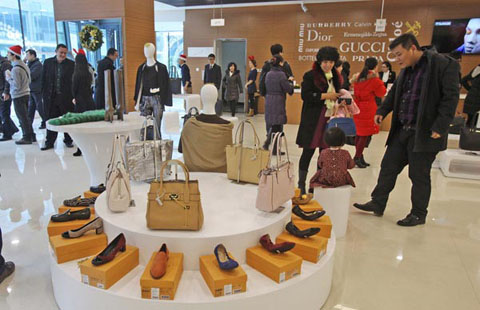
The regulation banned officials from using public funds to pay for visits to high-end hotels, restaurants and private clubs. The move spelled bankruptcy for many businesses in the luxury sector because officials have become wary of eating in expensive restaurants, wearing expensive luxury jewelry, or designer clothing and accessories for fear they might be exposed in the media and draw enormous criticism, or even be removed from their posts.

Copyright 1995 - . All rights reserved. The content (including but not limited to text, photo, multimedia information, etc) published in this site belongs to China Daily Information Co (CDIC). Without written authorization from CDIC, such content shall not be republished or used in any form. Note: Browsers with 1024*768 or higher resolution are suggested for this site.
License for publishing multimedia online 0108263 Registration Number: 130349