 |
|
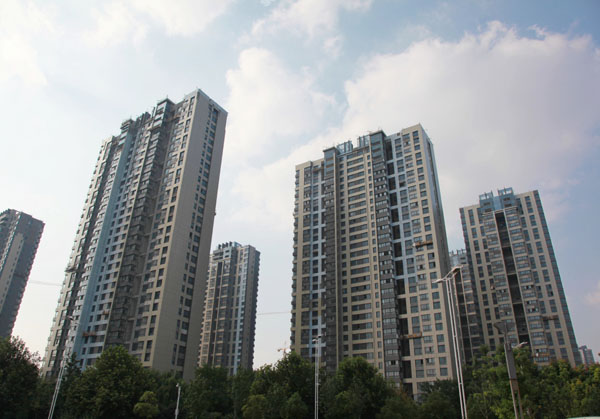
A housing project in Nanjing, capital of East China's Jiangsu province, Sept 21, 2014. [Photo/Asianewsphoto] |
Fallout from the property industry is taking a toll on many sectors of the economy, reports Bloomberg.
A long-running residential building boom is petering out, with the effects seen from slumping steel and cement prices, to electricity use, rail traffic and retail sales.
The drag will be long-lasting with home completions set to fall by 1 to 3 percent annually from next year to 2025 after almost tripling in 13 years, according to Beijing-based research company Gavekal Dragonomics. A once-in-a-generation shift in demand for housing and an overhang of supply suggest that the government can only cushion the effect with interest rate cuts such as the one announced Nov 21, not reverse it.
"The turning point has come," said Wang Tao, chief China economist at UBS Group AG in Hong Kong. "Construction has to come down so that means growth has to slow, and therefore steel demand, cement demand, energy consumption, mining production, appliances, automobiles-everything has to come down."
The challenge for Premier Li Keqiang is that services and consumption are not picking up the slack quickly enough, leaving China set for its weakest full-year expansion since 1990. Increasing evidence the slowdown is structural, not cyclical, is playing out on commodity markets and leaves the United States shouldering prospects for a pickup in 2015 global growth.
Bloomberg's monthly GDP tracker shows China's growth slowed to 6.91 percent in October from a year earlier, the third straight month below 7 percent and the weakest stretch since the start of 2009.
Most of the tracker's seven gauges-industrial production, electricity production, passenger traffic, railway freight volume, investment, retail sales and exports-are either slowing or falling.
Housing's influence on the economy is pervasive, driving down sales of everything from cement to steel, electrical appliances, furniture and cars. Its contribution to China's growth and thereby to global expansion makes it "the most important sector in the universe", Jonathan Anderson, former chief economist for emerging markets at UBS who now runs Beijing-based Emerging Advisors Group, wrote in a 2011 research note.
Real estate and construction accounted directly for 15 percent of 2012 GDP, one-quarter of fixed-asset investment, 14 percent of urban employment and about 20 percent of bank loans, the International Monetary Fund said in a July report. About 39 percent of government revenue was related to the property industry last year, Nomura Holdings Inc said.
Signs of the reversal in property are evident from a 10 percent slump in home sales in the first 10 months of 2014, triggered by waning investor demand and less need for upgrading to larger dwellings, both pillars of the decade-long boom.
Prospects for a recovery are damped by a supply overhang after the building binge that accelerated when the government spurred a record borrowing spree in response to the global financial crisis.
The fallout is rippling across the economy. Industrial output in October expanded 7.7 percent from a year earlier, the second-weakest pace since 2009, while retail sales gained the least in eight years. Investment in fixed assets grew 15.9 percent in the January-October period, down from a 20.1 percent pace in the same period in 2013.

Copyright 1995 - . All rights reserved. The content (including but not limited to text, photo, multimedia information, etc) published in this site belongs to China Daily Information Co (CDIC). Without written authorization from CDIC, such content shall not be republished or used in any form. Note: Browsers with 1024*768 or higher resolution are suggested for this site.
License for publishing multimedia online 0108263 Registration Number: 130349