Fund managers and brokers air concerns over trading rules, tax provisions of Shanghai-HK Stock Connect, reports Emma Dai.
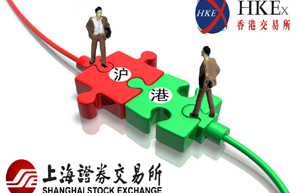
With the Shanghai-Hong Kong Stock Connect program set to start next month, fund firms and stockbrokers in Hong Kong are seeking clarity over trading rules, some of which have raised concerns among the investment community.
One rule that has many scratching their heads is "pre-trade checking for sell orders", said Sally Wong, chief executive officer of the Hong Kong Investment Funds Association.
To use the program, known as the "through train", overseas investors must transfer the shares in mainland companies they plan to sell to brokers by 7:30 pm on the evening before the actual trading day, or from 7:15 am to 7:45 am on the trading day itself.
 |
 |
Andy Maynard, global head of trading and execution at CLSA Ltd, a Hong Kong-based brokerage, said this means that overseas investors must make investment decisions a day before they are able to execute them.
"In a worst-case scenario, Los Angeles-based investors must decide literally two days ahead. This is a massive issue for offshore clients. Should the stock market collapse during the day, fund managers would not be able to sell until the next business day," he added.
Apart from pre-trade checking, lack of clarity in the mainland's disclosure regulation is also posing challenges for overseas fund managers.
"For fund houses, compliance is very important. But while regulations in Hong Kong are very specific, disclosure rules on the mainland are rather more in principle than practice," said Wong. Even seemingly straightforward terms are not specifically defined.
The mainland's Securities Law states that the shareholder of at least 5 percent of an individual company's outstanding shares shall comply with disclosure rules, such as "reporting a considerable change in shareholding".
But there is no clear rule on what constitutes 5 percent, Wong said. "For an international group with a lot of affiliates worldwide, it's not clear whether shareholdings of all of them should be counted together, or whether different funds issued by a fund company can be counted independently.
"What's more, we don't know what kind of shareholdings should be counted - A shares only or B shares, H shares, American depositary receipts, global depository receipts and derivatives issued by the same company," she said.
A shares are those listed on the Shanghai and Shenzhen exchanges, denominated in yuan. B shares are also listed in the mainland but are denominated in foreign currencies. H shares are those of mainland companies listed in Hong Kong. ADRs are the shares of foreign companies that are listed on United States exchanges, while GDRs are issued by banks to represent a foreign company's publicly traded securities.

Copyright 1995 - . All rights reserved. The content (including but not limited to text, photo, multimedia information, etc) published in this site belongs to China Daily Information Co (CDIC). Without written authorization from CDIC, such content shall not be republished or used in any form. Note: Browsers with 1024*768 or higher resolution are suggested for this site.
License for publishing multimedia online 0108263 Registration Number: 20100000002731