Editor's note: China Daily is publishing a series of stories on the impact of the country's fiscal system reform. In the last issue we discussed how the central government will shoulder larger responsibilities. The second article discusses how the burden may also fall on companies, which will face heavier tax payments.
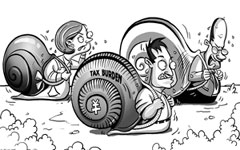
The nation's top leadership aims to establish a modern fiscal system by 2020, and tax reform is a key part of that drive. But some companies could face higher costs as a result, experts said.
Speaking to the Xinhua News Agency, Finance Minister Lou Jiwei said reform would focus on six categories of tax: value-added, consumption, resource, environmental, property and personal income.
|
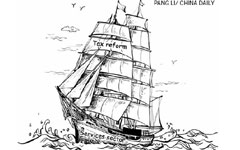
B2V reform began in 2012 with the transport and modern service sectors in Shanghai. The goal was to cut companies' total tax burden and encourage cooperation by allowing companies to deduct VAT via invoices from their suppliers. The reform later went nationwide and expanded to more sectors. The latest step was on June 1, when the telecommunications sector was added.
Tax authorities said in March that nationwide, B2V reform had helped lower companies' tax burden by about 140 billion yuan ($22.4 billion) as of the end of 2013.
But not every company is necessarily coming out ahead. On the day the reform was extended to the telecoms sector, the three major operators issued statements saying that the change would actually mean a significant decrease in their profit.
China Telecom Corp Ltd, for example, said its profit would drop by 30 percent.
Li Jun, a tax partner with PricewaterhouseCoopers LLP in China, said the telecom operators made large equipment purchases before B2V reform began. That equipment does not qualify for tax deductions, and in some cases, the telecoms companies can not get VAT invoices from their suppliers.
Those factors could push up the operators' costs, because the tax rate has risen from 3 percent (business tax) to 11 percent (VAT). But other companies purchasing services from the telecom operators will benefit from tax deductions, and that will lower their costs, he said.

Copyright 1995 - . All rights reserved. The content (including but not limited to text, photo, multimedia information, etc) published in this site belongs to China Daily Information Co (CDIC). Without written authorization from CDIC, such content shall not be republished or used in any form. Note: Browsers with 1024*768 or higher resolution are suggested for this site.
License for publishing multimedia online 0108263 Registration Number: 20100000002731