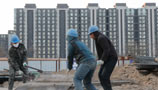
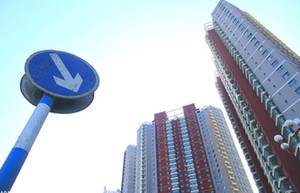
But the question is: How to make cities of the future livable and sustainable?
Lehmann from the University of South Australia says that the rapid urbanization of the region is presenting some
 |
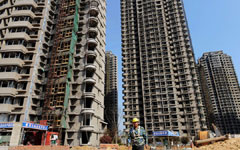 |
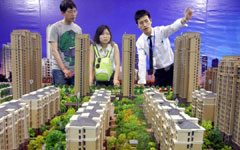
"The megacities or urban clusters we have seen develop in China in recent years are not the answer, and even the government recognizes that now."
The development of smaller and more sustainable eco-cities could offer a solution, and some Chinese urban areas are already offering an example to the rest of the region.
"In China, eco-cities can be new cities, built from the ground up, or redesigns of existing cities like Chengdu," Lehmann says, referring to the capital of Sichuan province in Southwest China.
"These are government initiatives where private developers are sold parcels of land according to a master plan. However, more and more communities are being included in discussions. This grassroots participation in the process is something very new to China, but is growing."
He says the concept could be reproduced in Asia, albeit not everywhere. "There is not a lot you can do with cities like Bangkok, Manila or Jakarta," he admits. "They are simply too big and too complex to undo and rebuild."
Lehmann says that second- and third-tier cities hold the key for many countries. In Tianjin, for example, the Chinese and Singaporean government are developing an eco-city with features such as a light rail transit system and integrated waste management. When ready in the mid 2020s, it will be able to accommodate around 350,000 residents.
"But even these cities are growing three to four times faster than big cities like Bangkok or Manila," he says, predicting that in 10 or 15 years' time, some of these smaller cities could see their population explode from a few million to as much as 10 million.
He says that governments need to invest now so they can put new infrastructure in place. Lehmann also warns that today's planners should not make the same mistakes as in the past, when urban planning was based on outdated urban models. "Second- and third-tier cities can be turned into green cities and I think that is the way forward for Asia. You cannot change cities like Shanghai or Beijing, Jakarta or Manila for that matter."
|
 |
 |
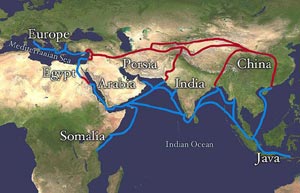
| Revival of ancient Silk Road 'essential' for Asian nations | Kazakh students say Silk Road will pave way for career openings |

Copyright 1995 - . All rights reserved. The content (including but not limited to text, photo, multimedia information, etc) published in this site belongs to China Daily Information Co (CDIC). Without written authorization from CDIC, such content shall not be republished or used in any form. Note: Browsers with 1024*768 or higher resolution are suggested for this site.
License for publishing multimedia online 0108263 Registration Number: 20100000002731