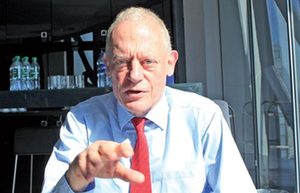
"In addition to joining with local partners, the key to success is making the best use of capital. Jidong's real investment accounts for just 30.6 percent of the joint venture but gives it a small majority. That means the group can control the joint venture even as it reduces investment risks."
The Mamba Cement project is believed to be the first successful instance of a Chinese business introducing project financing and long-term financing of infrastructure and industrial projects based on the project's forecast cash flows rather than on the balance sheets of its sponsors in Africa.
Nedbank Capital, a division of Nedbank Ltd, and the Bank of China Ltd's Johannesburg branch are providing $107 million in finance for Mamba, the South African news outlet Business Day has reported. The financial model reduces the parent company's financial pressure for sustainable development.
The direct investment, denominated in yuan, was structured that way to avoid foreign exchange losses, and this is important because more than 95 percent of the equipment used in the Mamba Cement project, worth 1.27 billion rand, is imported from China, Tao said.
South Africa also agreed to waive tariffs of 20 percent on the imported equipment.
In addition to increasing the export of equipment, the cement project will also help in the export of labor. Tao said that 1,000 Chinese workers, 600 for construction work and 400 for installing equipment, will be needed. The plant will also create jobs for 300 local residents and 1,000 workers indirectly.
The downside in South Africa is that labor issues, including strikes, are "a big headache", and the power supply can be unreliable, he said.
The founder and executive director of WIP, Gloria Serobe, said the investment will significantly increase South Africa's cement production capacity, contribute to economic activity and create jobs in Limpopo.
The project also has "significant black economic empowerment spinoffs", she said.
Moving China's industrial overcapacity to other countries does not simply mean relocating low-end manufacturing businesses, which "will never be successful", Tao said.
"The technology threshold in South Africa is very high, and we are using the most advanced technology in the Mamba project."
Introducing environmental protection technology has helped local small and medium-sized businesses, he said, and attracted a subsidy worth 170 million rand through cash and tax rebates from the Industrial Development Corp of South Africa.
"South Africa is an open market and a good platform for Chinese enterprises. If they can win the battle here, they can beat the international competition in European or the US."
Jidong Development Group also plans to join with other businesses in China that have excess capacity to tap African markets, including building a construction materials park in Zambia to produce cement, plate glass, architectural ceramics and construction steel.
"Transferring Chinese industrial capacity will boost equipment and labor exports," Tao said. "What is happening is that industrial capital is being transferred, but businesses with surplus capacity are confronted with slim profits, so they are short of capital. The central government should set up a specialized fund, specifically an equity fund, to support companies going abroad."
|
 |
 |
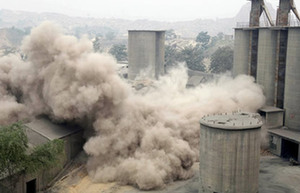
| Long way to tackling overcapacity | Overcapacity reduction targets raised for 2014 |

Copyright 1995 - . All rights reserved. The content (including but not limited to text, photo, multimedia information, etc) published in this site belongs to China Daily Information Co (CDIC). Without written authorization from CDIC, such content shall not be republished or used in any form. Note: Browsers with 1024*768 or higher resolution are suggested for this site.
License for publishing multimedia online 0108263 Registration Number: 20100000002731