|
 |
|
Zhang Chengliang / China Daily |
Devaluation of Chinese currency is a short-term phenomenon and poses no long-term risks
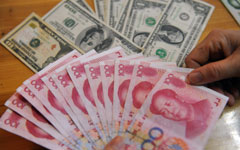
Since the beginning of this year, the renminbi has been depreciating against the US dollar. That marked a departure from the earlier trend of the Chinese currency appreciating against the US greenback since the exchange rate reform in 2005.
On Jan 15, the People's Bank of China's midpoint rate was 6.04 yuan for one US dollar. But by March 14, the same had fallen to 6.14 yuan. The bank announced that, effective March 17, the exchange rate would be allowed to rise or fall 2 percent from a daily midpoint rate set each morning by the central bank.
 |
 |
On March 21 the rate plummeted to 6.22 yuan. Compared with the exchange rate in mid-January, the yuan has depreciated more than 3 percent since then. However, the recent devaluation of the yuan is a rare phenomenon and there are several reasons for it.
Due to the US Federal Reserve's quantitative easing policy, short-term capital has been flowing out of emerging economies since the second half of last year, and currencies of emerging economies have been facing devaluation pressures.
Changes in the international environment have also weakened the expectations for yuan appreciation. Since January, the appreciation trend has slowed, or even moved onto a plateau. It is obvious that these changes have played a major role in the current round of devaluation.
Recent macroeconomic indicators have also triggered fears about the Chinese economy in the mid-term. In February, the growth rate of China's exports was minus 18.1 percent year-on-year. Even taking into account the effect of the Spring Festival, the numbers are still in the red. This is a major deviation from the earlier optimistic predictions.
In addition, during January and February, year-on-year growth in fixed asset investment was 17.9 percent, down 3.3 percentage points for the same period last year. More importantly, the added value of industrial enterprises' year-on-year growth in February fell to 8.8 percent, the lowest growth since April 2009.
At the same time, risks of a partial financial crisis are gradually emerging in China. Following the late payment crisis of China Credit Trust, the first corporate bond default of Chaori Solar, and the debt repayment crisis of a real estate company in Ningbo, downside macroeconomic indicators have promoted rising financial market risk factors.

Copyright 1995 - . All rights reserved. The content (including but not limited to text, photo, multimedia information, etc) published in this site belongs to China Daily Information Co (CDIC). Without written authorization from CDIC, such content shall not be republished or used in any form. Note: Browsers with 1024*768 or higher resolution are suggested for this site.
License for publishing multimedia online 0108263 Registration Number: 20100000002731