Indians are argumentative, so people say. Chinese are not, it seems. But right now in China there is a rather serious and healthy debate that may have to do with all investors' future interests - a debate about mixed ownership.
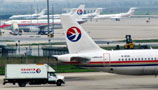
So-called mixed ownership is meant to allow large state-owned enterprises, which till now have held monopolistic power over many traditionally strategic industries, from energy to the postal service, to form joint ventures with private capital.
That is, to create mixed boards, as investors would say. This was officially listed as one of the national tasks by the top leaders in November to map out China's reform program.
|
 |
|
 |
In an article by senior economist Zhang Zhuoyuan in the April 16 issue of the fortnightly journal Qiushi, published by the Communist Party of China Central Committee, the plan for a mixed economy was described as a "major achievement" by the leaders at November's meeting, and an "inevitable (meaning logical) product" of China's reform and opening-up over the past 36 years.
In 1992, China decided to reform its economy into a "socialist market economy". In 1997, it accepted the joint-stock corporation as a more efficient system in capital use and organization for modern enterprises. In 2003, it continued the process by proposing that the joint-stock system, with access to plural equity investors, should be the mainstay of public ownership of enterprises.
By now, Zhang said, more than 90 percent of state-owned enterprises have been converted into joint-stock companies. The two domestic stock exchanges (Shanghai and Shenzhen) boasted 140 million active trading accounts in 2012. Mixed ownership is in fact a fait accompli in China, the economist said.
So, what last year's Third Plenum of the Party did, Zhang said, was to highlight the significance of mixed ownership as part of China's fundamental economic system, to encourage private capital to participate in SOE reform and thereby participate in the various mixed ownership schemes, and to allow workers' ownership of their companies' shares.

Copyright 1995 - . All rights reserved. The content (including but not limited to text, photo, multimedia information, etc) published in this site belongs to China Daily Information Co (CDIC). Without written authorization from CDIC, such content shall not be republished or used in any form. Note: Browsers with 1024*768 or higher resolution are suggested for this site.
License for publishing multimedia online 0108263 Registration Number: 20100000002731