URUMQI - With a number of new projects approved, China's far northwestern Xinjiang Uygur autonomous region is reviving the commercial splendor of the ancient Silk Road.
Construction of an airport in Qarilik county in south Xinjiang, the largest county in China with an area of nearly 200,000 square kilometers, was approved in late February and should get underway in the fall. It is the third airport approved this year and will bring the number of civilian airports in the region to 19.
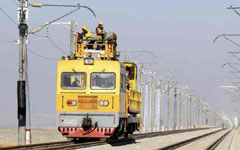
A total of 23 key projects with an investment of close to 20 billion yuan ($3 billion), include 5 railways, 14 highways and 3 airports. Construction will begin on all these projects this year, according to the Xinjiang Development and Reform Commission on Saturday.
|
|
 |
When Xinjiang was still known as Xiyu (literally "Western Regions"), the Silk Road made it the most international, multicultural melting pot in the world for almost 2,000 years. China's silk, porcelain and printing technology were taken to the West while spices, music and Buddhism were brought to the East. The route through central Asia gradually lost its significance in the age of sail and now, remote and somewhat isolated, Xinjiang lags behind other Chinese provinces in development terms.
Infrastructure, finances, technology, human resources, and sporadic violence all play their part in hampering Xinjiang's stability and development. For decades, China has worked to revive the regions past glories through investment principally in infrastructure and energy, hoping the unique position of the province at the heart of central Asia will bring prosperity to a region where more than half the population come from ethnic minorities. Transportation is now top of the agenda.
Besides the three new airports, two regional railways in the oil-rich north will join the national railway network this year. "Transportation is key to Xinjiang's development," said Pan Zhiping, head of the central Asia research institute at Xinjiang Academy of Social Sciences.
"A major corridor, with Xinjiang straddling central Asia and Chinese inland regions, can do a lot to protect China's energy security," said Pan. Xinjiang is an important producer of oil, gas and coal. Neighboring central Asian countries are also rich in natural resources, which is of great significance to China's sustainable development and energy supplies.
Work on a local Xinjiang railway and another two linking Xinjiang with neighbouring Qinghai and Inner Mongolia will begin this year, greatly improving movements of coal, oil and gas, said Zhang Chunlin, head of the regional development and reform commission.
At the end of 2013, Xinjiang had more than 170,000 km highways and just under 5,000 km of railways in operation, according to the regional transportation department. Xinjiang is expected to become a national transportation hub by the end of 2015, said Zhang Dehua, deputy head of the department.

Copyright 1995 - . All rights reserved. The content (including but not limited to text, photo, multimedia information, etc) published in this site belongs to China Daily Information Co (CDIC). Without written authorization from CDIC, such content shall not be republished or used in any form. Note: Browsers with 1024*768 or higher resolution are suggested for this site.
License for publishing multimedia online 0108263 Registration Number: 20100000002731