The possible links between reform of the yuan's exchange rate formation mechanism and the deleveraging of the domestic shadow banking system also puts the monetary authorities in a dilemma when making policy choices. Assuming that the central bank relaxes its interventions into the yuan's exchange rate, the decreased short-term capital flows will likely change expectations from appreciation to depreciation given the risk exposure of shadow banks and the withdrawal of the US Federal Reserve from its years-long quantitative easing policy. Such a reversal in expectations will increase the scale of short-term capital outflows, which will cause interbank interest rates to soar, thus adding more deleveraging pressures on commercial banks. This, if not appropriately handled, will plunge them into a vicious cycle.
|
 |
|
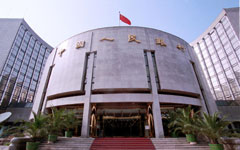 |
The central bank and the banking regulator should first strengthen policy coordination to address the risks in the shadow banking sector. For example, the banking regulator should work out specific ways to regulate the interbanking business, while the central bank should moderately lower interbank interest rates to avoid excessive adjustments among commercial banks. This will help reduce the risks in the shadow banking system and also minimize the repercussions caused by such adjustments to the whole financial market.
The central bank should also reduce its interventions into the yuan's exchange rate as soon as possible and considerably strengthen the management of short-term capital flows. Continuous interventions will probably result in overestimation of the yuan's exchange rate, which will fuel a large-scale short-term capital outflow and the rocketing of the domestic interbank interest rates.
To prevent any drastic rise or fall in the yuan's exchange rate following the reduction or suspension of central bank interventions, monitoring and regulation of abnormal short-term capital flows should also be tightened.
It is an irreversible trend that China will open its capital accounts in the middle and long run, but tightening regulation over short-term capital flows will bring the country more advantages than disadvantages at a time when big uncertainties still exist at home and abroad and adjustments to the shadow banking system will increase financial risks.
The author is a researcher with the Institute of World Economics and Politics under the Chinese Academy of Social Sciences.

Copyright 1995 - . All rights reserved. The content (including but not limited to text, photo, multimedia information, etc) published in this site belongs to China Daily Information Co (CDIC). Without written authorization from CDIC, such content shall not be republished or used in any form. Note: Browsers with 1024*768 or higher resolution are suggested for this site.
License for publishing multimedia online 0108263 Registration Number: 20100000002731