CHONGQING - China's new approach to urbanization has made the year 2013 a turning point, especially for the 260 million migrant workers who await the benefits of the change.
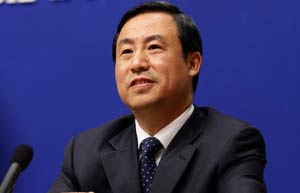
After decades of urban expansion, city dwellers now account for 52.6 percent of the country's total population, if calculated by total usual residents, according to Vice Public Security Minister Huang Ming. This figure falls to 35.3 percent of the population if calculated based on "
China's hukou system ties public services such as health care and education to residential status. Those without local hukou are usually barred from sending children to public schools and many, particularly migrants, are left with few choices but to send children to schools back home. Those without local hukou also face tougher restrictions on housing and car purchases. The 17-point gap between the two "populations" exposes the gap between public welfare for the locally registered population and for newcomers unable to register - largely migrant workers. Labor only "For a long time, China's urban areas have demanded labor from rural migrants, but offered little in return," said Wang Xiaoguang of the Chinese Academy of Governance. "No public welfare, let alone housing. This unfairness demands a change in state strategy." As a migrant who left his rural home for a job in the city of Chongqing in 1992, Xu Shuping, 50, certainly knows the difference between the lives of registered residents and those of migrants. Despite years in the city as a welder for a natural gas company, he was denied equal access to public welfare until 2010 when he changed his hukou status. At Xu's rural home, his son had to wake up at 6 am and walk for up to two hours to school each morning. This daily ordeal prompted Xu to attempt a change of hukou status so his son could be educated in the city. However, before Chongqing started its pilot hukou reform ahead of the rest of the country in 2010, the rigid system restricted status change. Xu was unsuccessful because a change would have required a vocational college degree and a formal employment contract, two restrictions that prevent many migrant workers from becoming real city folk. While restrictions are still in force in other parts of China, Chongqing has enabled about 4 million migrants to change hukou status. "I have a stable job, pension, health care and my son goes to a city school. I don't see much difference between me and other city dwellers," Xu said.
Copyright 1995 - . All rights reserved. The content (including but not limited to text, photo, multimedia information, etc) published in this site belongs to China Daily Information Co (CDIC). Without written authorization from CDIC, such content shall not be republished or used in any form. Note: Browsers with 1024*768 or higher resolution are suggested for this site.
License for publishing multimedia online 0108263 Registration Number: 20100000002731