Comments
  Print
Print  Mail
Mail  Large Medium Small
"If my contract management rights for the land could be recognized and eligible for trading or mortgaging, I would have no worries to scale up my operations," he said.
Previous lessons of rural land reforms
Anhui has long been a test bed for China's rural land reform. Xiaogang Village in Anhui became famous in 1978 after 18 of its farmers made a secret pact to resist the country's egalitarian agricultural system. The pact meant that after the farmers handed a certain percentage of their produce to government, they were able to keep the rest of the harvest from their contracted land for themselves.
Their practices were later recognized and followed in other places to encourage farmers' enthusiasm for productive farming.
In 1999, a reform approved by the country's authorities of land resources was carried out in Wuhu City of Anhui, allowing transfers of rural land in Longshan so the land could be used for industrial development. Factories were built, creating employment for local farmers, and a township has taken shape.
Land reform has transformed the poor village into a modern town. Farmers now live in apartment buildings with tap water and cooking fuel supplies. Their accesses to banks, schools, hospitals and supermarkets is on par with that of city residents.
The reform piloted in Wuhu has been extended nationwide and has accelerated the building of rural townships in China.
However, Liu Qi, deputy secretary-general of the Anhui provincial government, who is also a veteran agriculture expert, said the Wuhu mode of land reform features a rural land transfer campaign initiated by grassroots authorities, in which farmers still cannot handle their properties on their free will.
Under the Wuhu reform, village or township authorities have encouraged farmers to give up their homesteads in exchange for modern lives with housing, social insurance and other subsidies equal to those of city dwellers.
Instead of putting them up for sale on the free market, farmers' individual homesteads were collectively bought by the authorities for commercial real estate development.
Liu said under this mode, local authorities, rather than farmers, have been the primary beneficiaries of profits from selling the rights to land use. The individual interests of farmers were not fully considered.
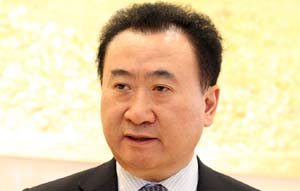
Wang Weiguo, rector of the Civil and Commercial Law School of the China University of Political Sciences, said that in the upcoming rural land reform, farmers should be allowed to decide whether to sell or keep their own properties.
Wang suggested that farmers should be given the right to sell a certain number of years' worth of management rights for their homesteads through an open transaction platform. After the period has ended, they may take back the property.
Wang said China's previous land reforms were carried out at the grassroots level and in piloted regions. Future reform will require the central government to carry out top-level design to regulate rural land use and ensure farmers' property rights.
"The government should mend laws and regulations to facilitate the equity evaluation, transaction, mortgage and registration of property rights in the rural sector to ensure the implementation of the state policies on rural land reform," he said.
Copyright 1995 - . All rights reserved. The content (including but not limited to text, photo, multimedia information, etc) published in this site belongs to China Daily Information Co (CDIC). Without written authorization from CDIC, such content shall not be republished or used in any form. Note: Browsers with 1024*768 or higher resolution are suggested for this site.
License for publishing multimedia online 0108263 Registration Number: 20100000002731