Comments
  Print
Print  Mail
Mail  Large Medium Small
Reform is going to be a big thing in the next few years - as indicated by the 60-point program adopted by China's leaders at the recent Third Plenum in Beijing.
But reform may not be a good thing for China's many listed companies. It is certainly not going to be as comfortable a business environment as one under government protection and monopoly. This is because many of these companies belong to the sclerotic status quo and are ill-prepared for change.
If one takes a quick look at the largest listed companies, most of them are still operating under the kind of official protection that the government's proposed reforms will remove.
In areas where government price controls will yield to the "decisive role" of the market, as the new reform program has promised, large corporations will probably have to redefine their profit centers and restructure their businesses in significant ways. They will have to learn to compete, either through spin-off operations or by working closely with the private sector.
To do this, they will have to become smaller, less heavily loaded with assets than they are today.
Virtually all manufacturing-centered companies fall into this category because, until now, they have depended on government-regulated prices for energy, resources and utilities.
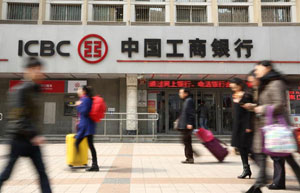
Banks and financial services, which make up a hefty chunk of the Chinese stock market, also face the challenges of there being no more central regulation of interest rates or of the price of money they process.
They have to prove capable of growing on less income from interest rates and more from value-added services.
According to one scenario suggested by the new reform program, some large State-owned enterprises would at some point withdraw from the competitive market to become industry-focused holding companies, the main task of which would be financial investment rather than managing production or services. The production and services they now manage would be taken over by various specialized companies in which the majority shareholder may not necessarily be the State.
This is very sensible for SOEs - to open their industries to competition without letting them all sink like the Titanic - and eventually sink the entire State sector.
The problem is that before sensible change takes root, where can general investors find good, reliable stocks to invest in? Perhaps, for the time being, they can't. Given that this reform will reconfigure the entire business landscape, there will be a limited number of companies that are both mature enough in management and innovative enough in business to adapt quickly. Small wonder that Chinese stocks are the cheapest in the world - and that is partly because investors don't know how much change their companies are about to go through over the next few years.
By comparison, non-State sector companies that can serve as worthy partners with SOEs - such as those with good technology, competitive management or global connections - are likely to win over investors.
A similar case would apply to companies that operate in less-protected but equally up-and-coming areas of the market - such as those owning a recognized consumer brand and those in e-commerce that offer mobile services and related goods (either applications or content).
There are also industries likely to receive large government incentives and therefore to benefit investors, such as some areas of healthcare and modernized agriculture.
Of course, not all big ships are destined to sink like the Titanic. Now that they have been given a clear message (from the new reform program), some SOE leaders might act more promptly and smartly than others. It would be safer for investors to place money with the reform-active SOEs rather than the reform-passive ones.
The author is editor-at-large of China Daily.
Copyright 1995 - . All rights reserved. The content (including but not limited to text, photo, multimedia information, etc) published in this site belongs to China Daily Information Co (CDIC). Without written authorization from CDIC, such content shall not be republished or used in any form. Note: Browsers with 1024*768 or higher resolution are suggested for this site.
License for publishing multimedia online Registration Number: 20100000002731