Comments
  Print
Print  Mail
Mail  Large Medium Small
However, mini-cities are also expensive to build: a single urban complex requires at least several billion yuan, so if it does not succeed, the results can be ruinous for investors.What makes the proposition even more challenging is that most of the property developers investing in urban complexes often have a common ambition: to attract top international brands such as Chanel and Gucci to set up shop in their complexes.
"I'm really concerned about whether China's consumption power can support the expansion of so many luxury brands," Yeung said. "Especially when the new leadership is cracking down on extravagant government expenditure. Previously, 70 percent of these top brands were bought as gifts to deal with guanxi - a term which loosely means "connections" - and I don't think the money was from the buyers' own pockets"
In addition, the property developers are in a poor bargaining position with the top brands and cannot expect them to pay top dollar to lease space, Yeung said. That is because the exclusive brands realize they have the pulling-power to draw shoppers to a mall, pulling-power the developers cannot do without. That reduces developers to the role of supplicants, willing to pay, even if begrudgingly, large sums to renovate grand stores for the most attractive tenants.
"It's just like McDonald's," Yeung said. "Wherever it goes, it brings a large crowd. So it is impossible to negotiate a good rent with it. And even if it signs a lease with you, it will not be for very long.
"But developers need to attract these brands to convince other less-influential brands. For instance, other fast-food brands will feel safe once they see McDonald's is there. Then you recoup from these brands the money you have lost to McDonald's."
Complicating matters for the developers is that even as they are trying to attract big, well-known brands for retail premises, they have to keep a close eye on how much money is coming in from the sale of residential blocks, keenly aware that the cash flow from leased office or shop space is notoriously slow. In the case of an average five-star hotel it takes more than 10 years to break even.
A typical case is Wanda Group, one of China's biggest property developers, which prefers to buy land in remote areas and build huge urban complexes. Instead of boasting fancy shops and international brands, these centers feature pleasant residential blocks with good supporting facilities.
"This strategy has been successful in quickly recouping investment," Yeung said. "But it also shows that urban complexes are still not really pulling in the kind of revenue commensurate with such big projects."
Unlike residential properties, whose prices always seem to be rising, commercial property is a lot less predictable, given the many variables that can affect the business, industry experts say. The shopping malls at the southern end of Chang'an Avenue in Beijing, which some reckon, seem fated never to enjoy good returns. That lack of optimism is borne out by facts and figures. In 2010, a high-end shopping mall, MaisonMode, from Hong Kong, closed for lack of custom; and while there are more than 30 malls in the northern stretch of Chang'an Avenue, there are fewer than 10 in the southern stretch.
Yang attributes this lack of success to a lack of convenient transport. another. But this is rarely seen in the "Many things can affect the operation of an urban complex, but the most crucial one is transport," Yeung said.
 Models at Ford pavilion at Chengdu Motor Show
 Brilliant future expected for Chinese cinema: interview
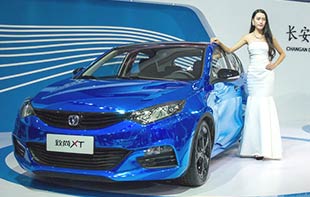 Chang'an launches Eado XT at Chengdu Motor Show
 Hainan Airlines makes maiden flight to Chicago
 Highlights of 2013 Chengdu Motor Show
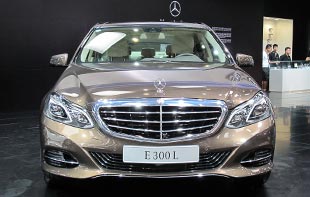 New Mercedes E-Class China debut at Chengdu Motor Show
 'Jurassic Park 3D' remains atop Chinese box office
 Beauty reveals secrets of fashion consultant
Copyright 1995 - . All rights reserved. The content (including but not limited to text, photo, multimedia information, etc) published in this site belongs to China Daily Information Co (CDIC). Without written authorization from CDIC, such content shall not be republished or used in any form. Note: Browsers with 1024*768 or higher resolution are suggested for this site.
License for publishing multimedia online 0108263 Registration Number: 20100000002731