Managing forex reserves


China needs to ensure the security and profitability of its assets
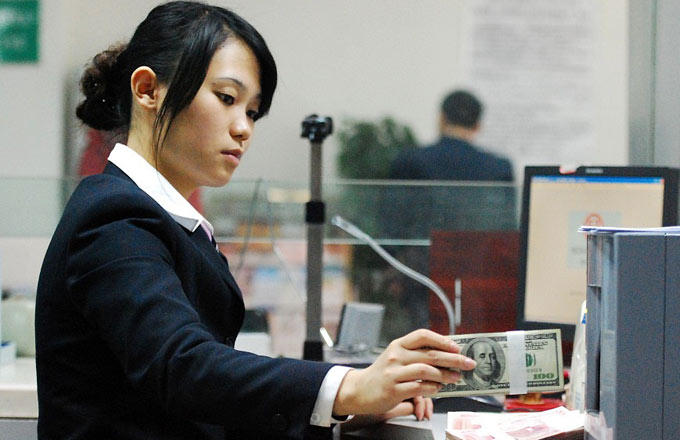
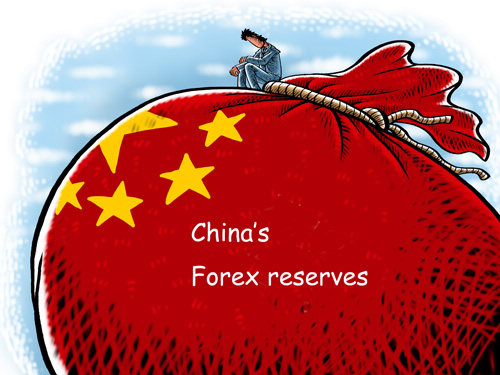
China is the world's largest holder of foreign exchange (forex) reserves, which reached $3.31 trillion in 2012. The annual growth of its forex reserves alone would still place China among the top five countries globally. (By the end of March, its forex reserves reached $3.44 trillion.) Even during the past decade, China's forex reserves had come under the global spotlight, and the State Administration of Foreign Exchange (SAFE), the world's largest institutional investor, was under the watchful eye of market participants around the world. So how can the Chinese government improve its management on this front?
|
 |
|
[CFP] |
Re-jigging the mix
Of the four external assets categories—outbound direct investment (ODI), portfolio investment, other investments (including trade credit, loans, currency, deposit and other assets) and reserve assets, China's forex reserves, or assets held by the government, make up a larger portion. To upgrade the mix of its external assets, China must boost its proportion of the other three investments, which are privately held assets.
China has already drawn up an array of policies and measures to lower the growth of its forex reserves and push the expansion of privately held external assets, such as facilitating foreign currency exchange under the current account and promoting ODI, among other things.
There is no denying that these measures have really worked, from surges in ODI in recent years to the snapping up of real estate in the United States and Cyprus by Chinese. Nevertheless, the risks Chinese enterprises and residents have met during their outbound investments have shown that it's unnecessary to overstress increasing privately held forex assets.
Now that the restructuring of external assets has begun, the focus should be on how to accomplish the transition smoothly and minimize side effects.
China is still a developing country and its currency has not yet evolved into an international currency. That is to say, China is still exposed to a potential international payment crisis. For this reason, forex reserves must be adequate. Whether Thailand, Malaysia and South Korea during the 1997 Asian financial crisis, or Russia in the subprime crisis, all of these countries worried about excessive inflows of foreign assets before the eruption of the crisis.
China should be on alert. The twin surpluses of the current account and capital account were reversed in 2012, and in the past few years, seasonal and monthly trade deficits were not rare. Meanwhile, the repatriation of trillions of dollars of foreign investments would bring about huge pressure and potential risks arising from the social and economic pressures of emerging economies may spread to the Chinese market.
Therefore, in the foreseeable future, the most effective way to improve the mix of external assets is to ensure the sheer growth of forex reserves and enhance the ratio of privately held external assets. In this regard, the next thing to do is innovate in the utilization of forex reserves and improve the returns on assets.
Management goals
The purpose of forex reserves management is to guarantee its safety, liquidity and profitability. During the decade when there was a forex shortage, China tended to value safety and liquidity more than profitability. Now, things have changed and China is free of such concerns.
However, for fear of dragging down economic growth and cramping ongoing industrial restructuring, China should not blindly curb the increase of exports and trade surpluses. Don't expect trade surpluses and the accumulation of international assets to be reversed immediately. China will continue to increase its forex reserves.