Solar wars threaten climate fight


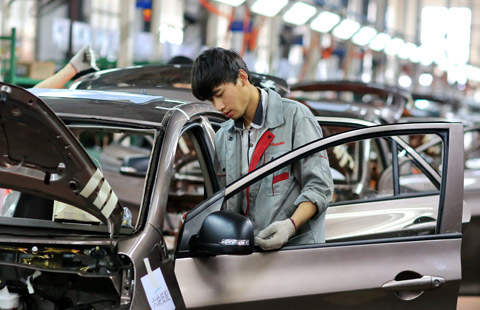
The expansion of the solar panel industry in China has played a crucial role in pushing prices down, making solar energy more competitive and driving its explosive growth.
Yes, China subsidises and promotes its solar industry. But the US and Europe also provide massive subsidies and support to many of their industries, including the clean and renewable energy industry. The US provides its solar companies with loan guarantees, research grants and tax deductions that include investment tax credits and accelerated value depreciation. And EU countries grant subsidies to consumers using solar energy and give incentives to producers through the feed-in tariff scheme, under which solar energy providers are paid prices higher than what is charged to electricity consumers with the difference being met by governments.
Without the subsidies, the solar industry would not have grown. Trade protectionist measures taken by one country against another, or by all countries against each other, would be a recipe for disaster - for trade, the solar industry and the environment.
Jeremy Leggett, chairman of Solarcentury and well-known solar energy advocate, uses the following analogy to illustrate the trade war: "A planet faces an asteroid strike. Its inhabitants manufacture rockets with which to head off the threat. But, as the rock nears, they descend into international bickering over who pockets what from rocket-making."
No one wins in this trade war given the global solar supply chain, explains Leggett. Solar ingots, the upstream feedstock, are mostly made in Europe and the US. The midstream products, cells and modules, are mostly made in China. If China is hit on the mid-stream products it exports, it could retaliate with tariffs on the upstream products it imports. "Downstream, the many companies installing solar at scale can only watch in horror. Everybody loses," Leggett says.
For example, in Europe, the tariffs against China would wipe out thousands of jobs, because most are not in manufacturing but in companies that install the modules, regardless of where they are made. The solution, Leggett adds, is for the leaders of the few countries where most of the solar panels are manufactured to make a deal that coordinates the subsidies required at the different stages of the solar chain, and which is necessary for the few years that some countries need to bring the price of solar energy to parity with that of conventional energy.
Leggett makes an apt conclusion: "The world will have to embrace common security on a bigger scale. Engaging in international competition while clinging to the illusion that markets always work will never solve our common problems of energy insecurity, poor air quality and resource depletion, never mind development. We will keep on maiming industries that can save us."
The author is executive director of South Centre, a think tank of developing countries, based in Geneva.