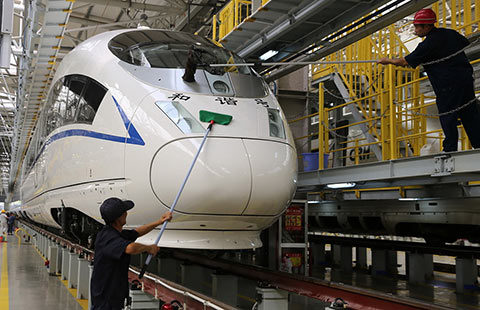
China's economy seems to be on a path of modest recovery, as reflected in the improvement of many economic indicators. However, China's domestic A-share market is one of the worst-performing equity markets in the world.
Moreover, the Shanghai Composite Index also underperformed the Hong Kong-traded H-share index by about 13 percent this year.
|
 |
|
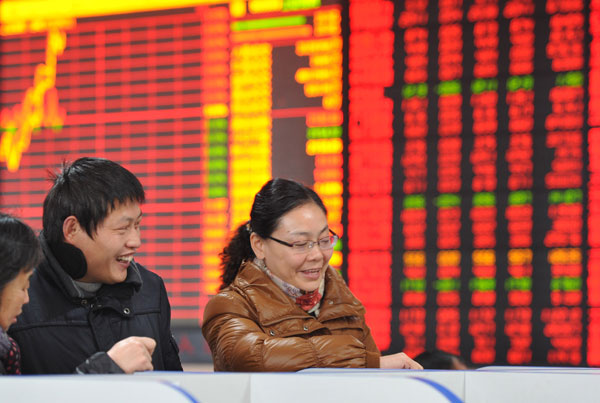
Investors at a stock brokerage in Fuyang, Anhui province, on Tuesday. Despite A shares' poor performance, there has been a large number of initial public offerings and share issuances in the market. An Xin / For China Daily |
A common assumption is that the Shanghai index reveals some profound information about the general economy that we may have missed. But does it? What is wrong with the A-share market? Why has the Chinese equity market performed so badly?
We wouldn't dare claim we know all of the answers, but we think the following factors may at least partially explain the poor performance of the domestic equity market: a decline in company earnings; various structural and governance issues; a large supply of available shares; and a draining of liquidity.

Earnings, of course, are fundamental. Corporate earnings have dropped sharply in light of the economic slowdown in the past few quarters. We estimate that the earnings of listed companies (excluding financials) in the A-share market first dropped sharply and later turned negative this year.
While listed banks continued to show good profits, the market is concerned about their earnings potential and the possibility that they will have a large amount of write-offs.
However, earnings cannot explain everything. Indeed, there seems to have been a continuous de-rating in the A-share market in the past three years, with the current price-to-earnings ratio being lower than during the global financial crisis.
Despite progress in stock market reforms in recent years, structural and governance issues remain in place and continue to plague China's equity market.
They include problems in the initial public offering process, insufficient transparency in company disclosures, inadequate investor protection, insider trading and other issues concerning the order of markets.
These issues may, in part, stem from the fact that the government often sees the stock market as more of a source of financing for the economy than as a way to improve capital allocation.
Since 2011, the China Securities Regulatory Commission has introduced reform initiatives to tackle some of these issues, and this has been welcomed by the market. But it will take time to see much progress.
Related Readings
Foreign interest should help boost flagging bourses
IPOs forecast to rise in 2013
Gloomy markets defy expected growth
China's leading securities brokerages downsize
Mixed views on whether shares can fall further


Copyright 1995 - . All rights reserved. The content (including but not limited to text, photo, multimedia information, etc) published in this site belongs to China Daily Information Co (CDIC). Without written authorization from CDIC, such content shall not be republished or used in any form. Note: Browsers with 1024*768 or higher resolution are suggested for this site.
License for publishing multimedia online 0108263 Registration Number: 130349