Comments()
  Print
Print  Mail
Mail  Large Medium Small
The US congressional report against Huawei and ZTE is based on rumors and aimed at impeding competition from China, according to the companies.
|
 |
|
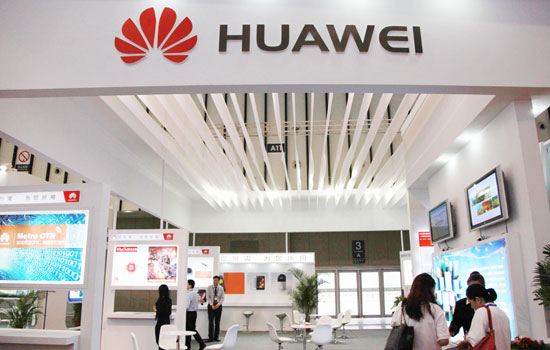
Huawei and ZTE, which are both still at an early stage of development, should not give up on the lucrative US market completely, according to Wu Hequan, an academician at the Chinese Academy of Engineering. [Photo/China Daily]? |
Both Huawei and ZTE claim to have been open and transparent during the year-long investigation and said they were disappointed after the House of Representatives' intelligence committee warned American companies to avoid buying from them.
The report, unusual in that it is a government action against two individual companies from China in a highly competitive global industry, reflects political anxiety at the rise of Chinese companies operating in the US.
It "employs many rumors and speculation to prove non-existent accusations", Huawei, the world's second-largest network equipment vendor, said in a statement posted on its website.
"We have to suspect that the only purpose of such a report is to impede competition and obstruct Chinese ICT companies from entering the US market."
David Dai, a spokesman for ZTE, said on Wednesday, "We tried to mitigate the doubts of the US by offering objective third parties to test our credibility during the investigation. We were disappointed with the result, although it did not surprise us."
According to Wu Hequan, an academician at the Chinese Academy of Engineering, US bias against Chinese telecom companies is deep-rooted and not easy to overcome.
"The frequent charges and accusations from the US side have already tarnished the market's reputation as an open and fair one," he said.
Huawei and ZTE, which are both still at an early stage of development, should not give up on the lucrative US market completely, he added.
"When the dust settles, time may tell people that Chinese companies are trustworthy, but they should insist on being there in the first place," Wu said.
Chinese telecommunication companies, including Huawei and ZTE, have gained global market share rapidly in recent years and that has caused "admiration, jealousy, and doubt" in some quarters, said Dai.
Internet and communication technologies are developing so rapidly that being part of the industry is "like sailing against the tide", said Dai. "You drop out very fast if you don't adapt to changes."
An example of this is the decline of Finnish company Nokia, the industry's former main player. It took less than five years for it to fall from the world's No 1 to a loss making company in 2012.
Unlike established Western telecommunication companies, both Huawei and ZTE started from scratch and have been able to adapt quickly to change. Like most Chinese manufacturers, they are hard working and diligent. These qualities enable them to seize opportunities rapidly during a period of industry reshuffle, according to Dai.
Such rapid success would not be possible in traditional industries, according to Dai.
"If we were in the energy industry there is no way that we could capture the market so fast," he said.
Most European countries are far more open to both companies and they have participated in many infrastructure projects there.
Huawei is well established in the UK, where it provides telecommunication equipment to key domestic companies such as British Telecom. And in Germany ZTE is involved in building the national broadband network.
Although some media reports have suggested that European countries could follow the lead of the US in restricting both companies' activities, Dai said Europe in general is open to them.
Despite the wide media attention given to the report its direct impact on the companies is small, according to Dai. It mainly talks about systems products in the US, while the bulk of their profits there are from selling end products such as mobile phones, he said.
ZTE's US sales amounted $400 million in 2011. Systems products mentioned in the report accounted for just $30 million or this, less than 10 percent of total US sales, he said.
The company's overall US performance has been good, he added.
"Overall the decision does not influence our business much," he said.
"The US remains a very important market for us and we will continue to communicate with them."
Contact the writers at diaoying@chinadaily.com.cn

 Use of RMB as settlement currency rise
 Daimler starts new $2.4b plant
 Overdue loans pile pressure on lenders
Copyright 1995 - 2010 . All rights reserved. The content (including but not limited to text, photo, multimedia information, etc) published in this site belongs to China Daily Information Co (CDIC). Without written authorization from CDIC, such content shall not be republished or used in any form. Note: Browsers with 1024*768 or higher resolution are suggested for this site.
License for publishing multimedia online 0108263 Registration Number: 20100000002731