|
 |
|
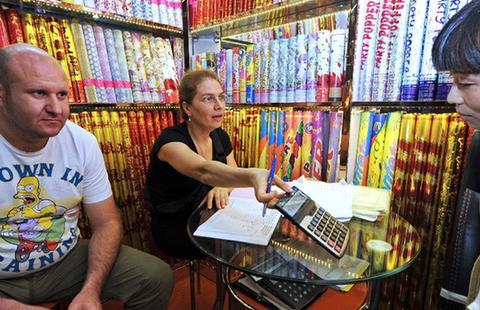
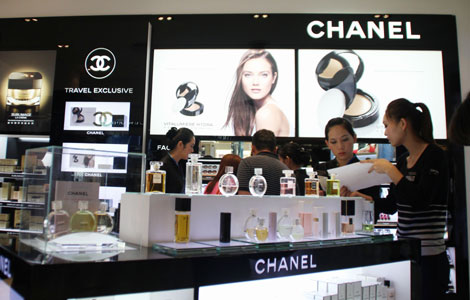
Tourists shopping in a duty-free shop in Sanya, Hainan province. Consumers in second-tier Chinese cities are becoming more avid for luxury goods, according to a survey. [Photo / China Daily]? |
Second- and third-tier Chinese cities have become battlefields where rivals in the luxury-goods industry compete for market share, the survey found.
"Lower-tier consumers are having their first taste of buying 'obvious luxury', that is, prominent and socially accepted status symbols, and are hungry for knowledge in an attempt to move beyond price comparison," said Jeffery Tan, director of Starcom MediaVest Group China's National Research and Insights.
He said Chinese shoppers in first-tier cities have become sophisticated enough to no longer want luxury goods merely for the purpose of showing off. They instead want them for their inherent quality.
The survey, named "Luxe", was conducted among 1,002 respondents who live in 43 first- to third-tier cities and make a minimum income of at least 20,000 yuan ($3,160) a month and who spend more than 10,000 yuan a year on luxury goods.
"As to the luxury brands themselves, such as Louis Vuitton, they have reached a saturation point in cosmopolitan cities such as Beijing, Shanghai and Guangzhou," Tan said. "If they want to seek further growth, it becomes a must for them to reach out to second- and third-tier cities."
Bertilla Teo, the CEO of Starcom MediaVest Group in China, said the brands are well-positioned to move into additional markets.
"They will complete all the preparation work before they make the move," Teo said.
Ouyang Kun, director of the World Luxury Association's China Office, said luxury brands have recently been affected by bad publicity.
"But to our great surprise, the negative news has somehow boosted the sales of these luxury brands," Ouyang said.
In smaller cities, people are more likely to give gifts to associates or acquaintances than people in the cities. Forty percent of the survey respondents in second-tier cities said they had given luxury goods as gifts to such people, a greater proportion than in first-tier cities.
"The close proximity to first-tier cities has helped second-tier cities to catch up," said Angie Chan, associate director of Starcom MediaVest Group China's National Research and Insights.
Celebrities are meanwhile exerting a greater influence on luxury shoppers in second-tier cities. Of the respondents from such places, 122 said they would buy a popular brand that they saw endorsed by a celebrity. In first-tier cities, 88 respondents gave the same answer, as did 101 in third-tier cities.
Shoppers in second-tier cities are using Internet search engines more and more to buy luxury goods.
Data from the China Internet Network Information Center in April suggested that 356 million people in China were using mobile Internet devices by the end of 2011, up 122 million year-on-year. Meanwhile, 190 million people in the country were using smartphones.
On average, the Chinese used Internet mobile devices for 109 minutes a day.
shijing@chinadaily.com.cn

Copyright 1995 - . All rights reserved. The content (including but not limited to text, photo, multimedia information, etc) published in this site belongs to China Daily Information Co (CDIC). Without written authorization from CDIC, such content shall not be republished or used in any form. Note: Browsers with 1024*768 or higher resolution are suggested for this site.
License for publishing multimedia online 0108263 Registration Number: 130349