BizViews
Should China revalue its currency?
By Gary S. Becker (China Daily)
Updated: 2010-02-24 13:22
 |
Large Medium Small |
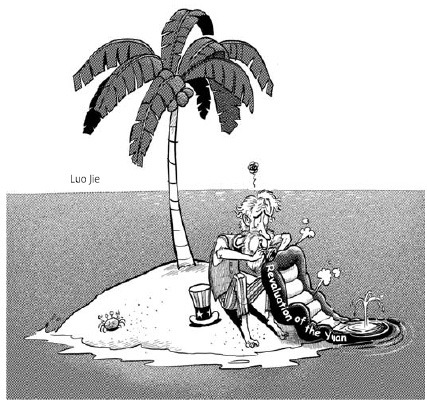

Two of the most important and closely related economic issues today are the value of the yuan and the huge assets accumulated by China, mainly in the form of United States Treasury bills and other US government assets.
China's central bank had the yuan's value fixed at a little over 8 per US dollar during the 1990s and until 2005. It then allowed the yuan to rise gradually to less than 7 a dollar until 2008, when it again fixed the rate of exchange at about 6.9 yuan per dollar. This exchange rate is considerably above a free market rate that would be determined in a regime of flexible exchange rates. So there is no doubt that China is intentionally holding the value of its currency below the rate that would equate supply and demand.
The value of the greenback has fallen substantially against other currencies since May 2009. Since the yuan is tied to the dollar it's value, too, has declined in the same ratio: 16 percent against the euro, 34 percent against the Australian dollar, 25 percent against the Korean won, and 10 percent against the Japanese yen. This substantial devaluation of the yuan has made many countries angry with China's policy of pegging it to the US dollar.
US President Barack Obama has apparently complained to President Hu Jintao about the yuan's low value and urged him to revaluate it substantially.


The US and other countries hope that greater demand from China for their exports, resulting from a higher value of the yuan, will help them resume sizable economic growth as they recover from severe recession. Their governments especially want to reduce the high levels of unemployment.
Indeed, in good part due to the low value of its currency, China has run substantial surpluses in its current trade account because it imports fewer goods and services than it exports. As a result, it has accumulated enormous reserves of assets in foreign currencies, especially US government assets denominated in dollars. At the end of last year, China had an incredible more than $2 trillion in foreign currency reserves, which included US Treasury bills. This is by far the largest reserve in the world and its ratio to China's GDP is huge: a quarter of about $8 trillion (purchasing power parity adjusted).