Top Biz News
Yulong's niche in competitive smartphone market
By Wang Xing (China Daily)
Updated: 2010-01-25 08:03
 |
Large Medium Small |
 |
|
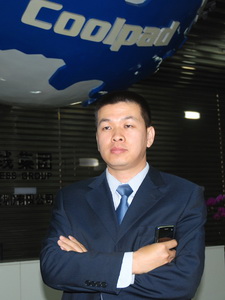
Li Wang |
The company is a domestic firm, but its handsets are sold at about same price as the world's top mobile phone providers. Although not renowned for its sharp design or powerful functionality, the company's smartphone brand, Coolpad, is extremely popular with millions of Chinese users.
Over the past 17 years, Guo has successfully fought off competition from rivals by focusing on dual SIM card cell phones, which allow the use of two services from different carriers without the need to carry two phones at the same time.
His company was the only Chinese mobile phone maker to launch its own online application store last year. Coolpad's handset came with its online application store called Coolmart to challenge Apple Inc's popular iPhone.
"There are many hard decisions to make in the development of a company but the most important thing is to keep your feet on the ground," said Guo.
Established in 1993, Yulong used to be a software provider for Chinese telecom operators.
However, the popularity of pagers, which are simple personal telecommunications devices for short messages, in the late 1990s in China prompted the company to transform itself into a device manufacturer.
In 2002, Yulong entered the cell phone market. Unlike other companies that started by producing low-end handsets, Yulong's strategy at the very beginning was to target high-end users.
"Many domestic firms were competing over low prices but we didn't want to do that," said Li Wang, vice-president of Yulong.
"We accumulated a lot of technology and talent as a pager manufacturer, so we decided to target high-end users, mainly business users, from the very beginning," he said.
The strategy has helped Yulong to stand out from hundreds of its domestic peers. But it also put the company in direct competition with foreign giants such as Nokia and Motorola.
Yulong's solution, however, was to partner with China Unicom and produce a cell phone based on CDMA technology, which few of the foreign cell phone giants at that time supported.
In 2001, the Chinese cell phone operator China Unicom had just launched its CDMA network and was in great need of handsets that supported the nascent technology. Before that, China's telecom networks were based on GSM technology that was supported by Nokia and Motorola.
"Partnering with China Unicom has given us a niche to allow us to survive in the market and it paved the way for our future development," Li recalled.
As Yulong's business grew, the reliance on China Unicom has didn't always pay off.
In 2008, Chinese telecom regulators announced an industry restructuring plan in which China Unicom's CDMA business would be split off and sold to China Telecom. That meant Unicom savagely cut the number of its purchases from most of its handset partners.
As a result, Yulong's handset shipments in the first half of 2008 dropped to 160,000, a 44.8 percent decrease from the same period of 2007. The company also posted a HK$49.3 million ($12.9 million) loss during that time, the first since the company's parent firm China Wireless Technologies Limited was listed on the Hong Kong stock exchange in 2004.


In 2009, with China Telecom starting to purchase more handsets, Yulong's business saw a recovery. That helped the company's revenue in 2009 to increase about 100 percent.
"The launch of 3G has provided a big opportunity for us," said Li. He said the company plans to launch more 3G handsets in China in coming years and hopes to aggressively expand in foreign markets.