Top Biz News
'Hot money' blowing bubbles
By Xin Zhiming (China Daily)
Updated: 2009-12-30 08:05
 |
Large Medium Small |
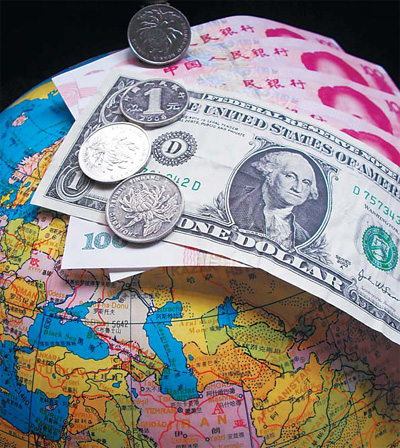
Surging flows may lead to stock market volatility, say economists
The rising inflow of speculative capital, or "hot money", into China could lead to "asset bubbles", said Fan Gang, member of the central bank's monetary policy committee.
The latest foreign exchange reserves figures released by the People's Bank of China reveal that inflows increased by about $37.2 billion - the second highest monthly rise this year - to $2.78 trillion by the end of November.
The $37.2 billion gap, indicating increased inflows, is about $16 billion more than the cumulative figures for the country's trade surplus and foreign direct investment (FDI) in November.
Economists have warned that the additional $16 billion could well be "hot money" inflows intended to gain from the rising value of the yuan or realty.
"But such calculations are rough," said Sun Lijian, an economist with Fudan University in Shanghai. He said the calculations omit factors like the inflow of investment returns by Chinese companies or the fact that part of the FDI could be actually "hot money". 
The real figure could be much larger than $16 billion in November, he said. Some of the FDI inflows are not used for real economy investments, but rather in the stock or real estate markets, he said.
"I think there must be some speculative capital that has not been accounted for," said Sun.
The calculation of "hot money" has always been controversial in China. Last year, a Chinese Academy of Social Sciences scholar said such money could have amounted to 1.75 trillion yuan, triggering hot debates among Chinese economists and officials as to how much "hot money" has actually entered the country.
But with domestic asset prices rising sharply, economists concur that while there is "hot money", it is difficult to guesstimate the actual quantity.
The nation's main stock market index, for example, has risen by more than 75 percent compared with November 2008. Prices of many apartments in Beijing have also nearly doubled within a year.
According to a recent study conducted by the Guangdong provincial academy of social sciences, "hot money" has been flowing into the country since June.
| ||||


Many economists have warned in recent weeks that the US Federal Reserve's low-interest policy is encouraging global liquidity to move towards emerging markets.
Russia said it plans to adjust regulations to limit the inflow of hot money into the country while encouraging long-term investments, according to Prime Minister Vladimir Putin.